
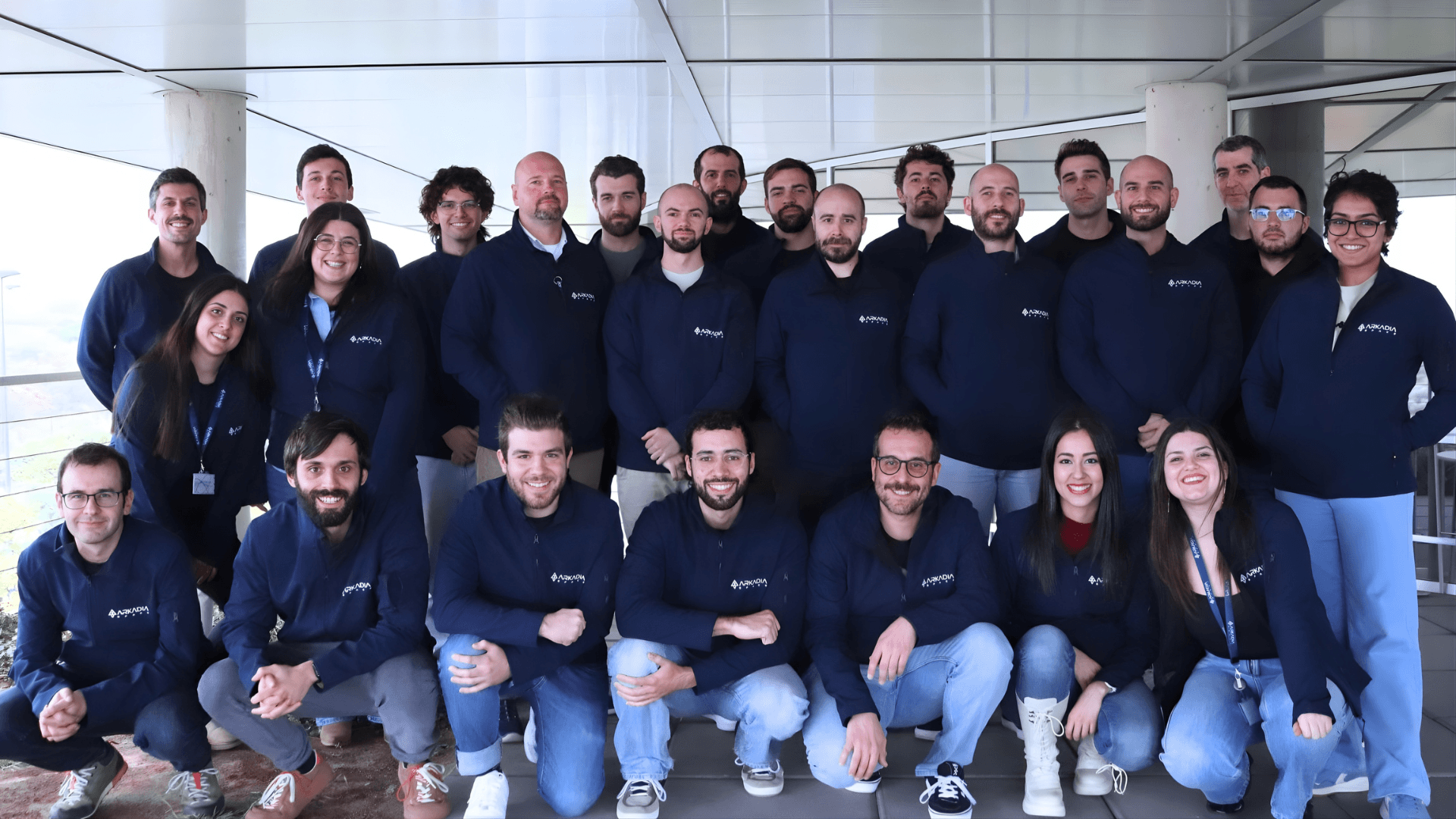
Spanish space company Arkadia Space has secured €14.5 million in funding
from the European Innovation Council Accelerator. The package includes a €2.5
million grant, €6 million in equity from the EIC Fund, and €6 million in
private investment.
Beyond financial backing, the selection reflects direct institutional
support from the European Commission for Arkadia’s green propulsion technology
based on hydrogen peroxide, as well as a broader commitment to advancing
critical space technologies in Europe.
Arkadia is developing a new hypergolic bipropellant propulsion system
based on high-concentration hydrogen peroxide and a proprietary green fuel.
Designed to replace hydrazine and its derivatives, highly toxic propellants
increasingly restricted under European regulation, the technology aims to
improve safety, performance, and sustainability in space missions.
Its hypergolic nature enables instantaneous ignition upon contact
between propellants, eliminating the need for complex ignition systems while
increasing reliability and precision for operations such as spacecraft docking
and lunar landings. The system is also expected to reduce operational and
refuelling costs by more than 60 per cent compared to conventional solutions.
EIC
support comes at a critical moment for Arkadia. Over the past year, we have
demonstrated that our technology meets market requirements and offers a true
performance alternative to highly toxic fuels. This recognition confirms that
we are on the right path and gives us a tremendous boost to commercialize the
technology as early as next year,
said Francho García, co-founder and CEO
of Arkadia Space.
The EIC selection follows the in-orbit validation of DARK, Arkadia’s
propulsion system, launched in March 2025 aboard a D-Orbit satellite during a
SpaceX mission, marking the first time a hydrogen peroxide-based propulsion
system reached space in Europe.
The funding will support the commercialisation of Arkadia’s green
propulsion technology, further R&D, expansion of its testing
infrastructure, and the scaling of its commercial operations.