Category: health
Wellness, fitness, medical news
-
Same infection treatment for different ages may fail
This doesn’t mean as we get older our bodies completely betray us. Our work demonstrates that aged mice are capable of mounting the appropriate disease tolerance response Janelle Ayres Foxo1 and Trim63 Proteins Drive Age-Dependent Cardioprotection The researchers discovered that young survivors were protected by a protein called Foxo1 and a gene it regulates, called read more
Written by

-
Common chemo drug increases risk of heart damage study finds
Hypertension Creates Hidden Energy Vulnerability in the Heart Mechanistically, the team showed that chronic hypertension produces a latent energy fragility: it impairs the heart’s ability to adapt to metabolic demands, reduces energy flexibility, and creates a state of “limited reserve,” still compensated thanks to apparently normal mitochondrial function. When anthracyclines—known to directly damage mitochondria—are administered, read more
Written by
-
Colorectal cancer: DNA testing unlocks hereditary clues
If a blood test is negative, DNA analysis of polyps is the way to detect this form of genetic predisposition. This is important because siblings of someone with this form of predisposition are not at increased risk, but their offspring may be Richarda de Voer Colorectal cancer is one of the most common cancers in read more
Written by
-
Emojis in medical communication: opportunities and pitfalls
Click to enlarge: The 50 most common emojis Image source: Hanauer DA, Raab GC, Hanauer SN et al., JAMA Network Open 2026 (CC BY 4.0) The most common kind of emojis used were smileys/emoticons (58.5%), followed by objects (21.2%) and people and body (17.6%). The most used emoji was the smiling face with smiling eyes read more
Written by

-
Multiple sclerosis: how EBV can evoke nerve damage
Olivia Thomas Image source: Karolinska Institutet; photo: Erik Holmgren The new study shows that when the immune system fights EBV, certain T cells – which normally attack the virus – can also react to a protein in the brain called Anoctamin-2 (ANO2). This phenomenon is called molecular mimicry – immune cells mistaking the body’s own read more
Written by

-
Swedish hospital uses AI to tackle breast screening backlogs
Professor Pascal Baltzer Image source: MedUni Wien The session also heard from Professor Pascal Baltzer from the Department of Biomedical Imaging and Image-guided Therapy at Vienna General Hospital who looked at AI in screening from the perspective of the latest trials. He said a key factor in AI in screening was the shortage of radiologists read more
Written by
-
Proton therapy improves survival in head & neck cancers
“The primary thing for patients to understand is these trials overwhelmingly show that both proton therapy and traditional radiation are great treatment options,” Frank said. “That said, these results indicate a survival benefit for proton therapy in oropharyngeal cancer patients as well as reduced high grade toxicities during treatment and less feeding tube dependence. These read more
Written by

-
Hands-only CPR: how TV gets it wrong
Beth Hoffman, Ph.D., MPH., assistant professor of behavioral and community health sciences at University of Pittsburgh School of Public Health Image credit: University of Pittsburgh According to the American Heart Association, each year, more than 350,000 out-of-hospital cardiac arrests occur in the U.S. When a person has a cardiac arrest, receiving CPR immediately from someone read more
Written by

-
Gene-editing technologies: from lab to patient
This may make the development of gene editing treatments for smaller disease populations financially feasible and commercially scalable Trevor Martin ‘There are almost 7,500 known genetic diseases, of which over 4,500 are believed to be caused by a mutation in a single gene,’ commented Trevor Martin, PhD, co-founder and CEO of Mammoth Biosciences of Brisbane, read more
Written by
-
New tool detects awareness in unresponsive patients
This is the challenge addressed by a multicenter European study coordinated by Jacobo Sitt (Inserm) at Paris Brain Institute, with which Dragana Manasova was involved during her doctoral work. The researchers propose a novel approach: combining six assessment techniques, each capturing a distinct aspect of brain function: high-density electroencephalography (EEG) at rest and during an read more
Written by

-
Injectable breast ‘implant’ as alternative to surgery
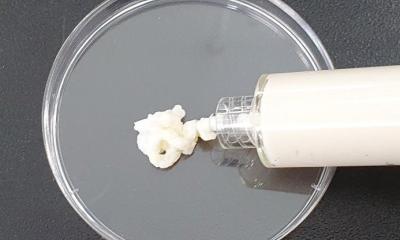
An alternative strategy involves acellular dermal matrix (ADM) — skin that has been processed to remove the outermost layer. This leaves a material with important cellular components for healing, including collagen, elastin and growth factors. Currently, ADM is available primarily in sheet form for tendon repair or plastic surgery, but Pham Ngoc Chien, Chan-Yeong Heo read more
Written by
-
Injection could protect the brain after a stroke
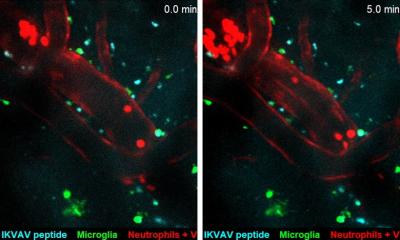
Many stroke patients suffer from significant cognitive decline throughout the subsequent year after a stroke. The new therapy is primed to address that secondary injury Ayush Batra Mouse Model Tests Stroke Therapy in Realistic Conditions The findings are highly relevant for future clinical applications because the scientists tested the approach in a mouse model that read more
Written by
-
Final push for new device to prevent birth trauma
This simple device has the potential to address a common, yet potentially avoidable, complication Andrew Weeks BirthGlide: Innovative Device to Reduce Complications in Labour The BirthGlide team is developing a novel, simple-to-use device to reduce complications in the second stage of labour and the use of traumatic procedures. It works by reducing resistance between the read more
Written by

-
Multiple sclerosis biomarker linked to progression
Canada has one of the highest rates of MS in the world with over 4,300 Canadians diagnosed with the condition each year, according to MS Canada. Roughly 10% of people with MS are initially diagnosed with progressive MS, which leads to a gradual worsening of symptoms and increasing disability over time. Patients initially diagnosed with read more
Written by

-
Mobile Stroke Units may ease healthcare system pressure
Professor Grunwald continued, “Questions had been raised about the cost-efficiency of MSUs and how they could be integrated into clinical practice but this study shows clear benefits to their widespread adoption across the country. This research shows that the MSU concept may benefit from equipping them with extended capabilities that make them suitable for dealing read more
Written by
-
AI labeling in radiology: filling in the missing step
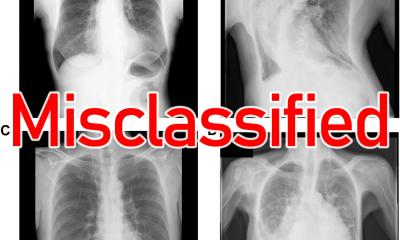
Representative examples of misclassifications by Xp-Bodypart-Checker and second model (CXp) Projection-Rotation-Checker. A) Chest radiograph of a female in her 50s that was misclassified as “Abdomen” by Xp-Bodypart-Checker. B) PA chest radiograph of a female in her 40s that was misclassified as “Lateral” by CXp-Projection-Rotation-Checker. C) AP chest radiograph of a male in his 50s that read more
Written by
-
Predicting hip fractures from just 7% of the bone
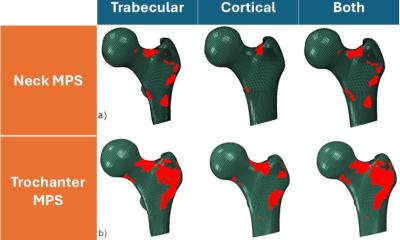
3D visualization of statistically significant elements. Critical regions are shown for a) neck fracture in relation to Major Principal Stress (MPS) variable; b) trochanter fracture in relation to MPS variable; c) trochanter fracture in relation to Major Principal Strain (MPE) variable, concerning trabecular tissue (left), cortical tissue (center), and both tissues (right) respectively. Image source: read more
Written by
-
Demographic bias creeps into pathology AI, study finds
We found that because AI is so powerful, it can differentiate many obscure biological signals that cannot be detected by standard human evaluation Kun-Hsing Yu Analyzing several major pathology AI models designed to diagnose cancer, the researchers found unequal performance in detecting and differentiating cancers across populations based on patients’ self-reported gender, race, and age. read more
Written by

-
AI helps detect kidney cancer faster
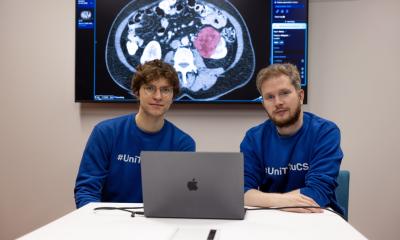
This study adds to the growing body of evidence that modern AI tools developed in research labs can make a real impact in clinical practice and support doctors in their daily work Dmytro Fishman AI-Powered BMVision Helps Radiologists Detect Lesions Faster To support clinicians in interpreting complex medical images, computer scientists at the University of read more
Written by
-
New system detects K. pneumoniae resistance & virulence
Prof. Dr. Can’s team focused on precisely these strains. Their newly developed diagnostic system identifies, in a single and rapid test, the genetic markers responsible for both pathogenicity and antibiotic resistance. Until now, these features could only be assessed separately, often through time-consuming procedures that delayed effective treatment. The ability to capture this critical information read more
Written by