
nttttn
nt
nttnt</div>n</div>nttt</div>ntttt</div>n”,”data”:[{“divId”:”gpt-dsk-tab-list-inlistx-uid7″,”displayType”:”medrec”,”targeting”:[{“key”:”pos”,”value”:”btf”},{“key”:”pos”,”value”:”mid”},{“key”:”pos”,”value”:”in-listX”}],”lazyLoad”:”no”,”lazyLoadMultiplier”:2,”zone”:”list/in-listX”,”sizes”:[[300,250],[300,251]]}]}},{“ID”:1234781515,”position”:8,”positionDisplay”:9,”date”:”2026-04-16 14:26:42″,”modified”:”2026-04-16 16:13:40″,”title”:”Amedeo Modigliani,u00a0Reclining Nude</em>, 1917″,”subtitle”:null,”slug”:”amedeo-modigliani-reclining-nude-1917″,”caption”:”Amedeo Modigliani,u00a0Reclining Nude</em>, 1917″,”description”:”ntttt
nnnnnnn
ntThereu2019s no allegory or backstory in the roughly 26 large-scale, reclining female nudes that Amedeo Modigliani painted between 1916 and 1919. Inspired by art history but stripped of any context, they look like distant cousins of Renaissance Venuses and other idealized women but stand apart with their raw carnality (and pubic hair, which made them appear quasi-pornographic to viewers at the time). They were so dangerously sensual, in fact, that when they debuted in Paris at Galerie Berthe Weill in December 1917, the police arrived to remove one of them from the gallery window.</p>n</div>”,”alt”:”Amedeo Modigliani,u00a0Reclining Nude</em>, 1917″,”image_credit”:”Private collection. Digital image: HIP/Art Resource, New York.”,”url”:”https://www.artnews.com/list/art-news/artists/nudes-that-changed-western-art-history-1234781492/”,”image_id”:1234781551,”image”:”https://www.artnews.com/wp-content/uploads/2026/04/AR9479079-copy_WEB.jpg?w=1024″,”sizes”:{“pmc-gallery-s”:{“src”:”https://www.artnews.com/wp-content/uploads/2026/04/AR9479079-copy_WEB.jpg?w=320″,”width”:320,”height”:201},”pmc-gallery-m”:{“src”:”https://www.artnews.com/wp-content/uploads/2026/04/AR9479079-copy_WEB.jpg?w=640″,”width”:640,”height”:403},”pmc-gallery-l”:{“src”:”https://www.artnews.com/wp-content/uploads/2026/04/AR9479079-copy_WEB.jpg?w=800″,”width”:800,”height”:504},”pmc-gallery-xl”:{“src”:”https://www.artnews.com/wp-content/uploads/2026/04/AR9479079-copy_WEB.jpg?w=1024″,”width”:1024,”height”:645},”pmc-gallery-xxl”:{“src”:”https://www.artnews.com/wp-content/uploads/2026/04/AR9479079-copy_WEB.jpg?w=1280″,”width”:1280,”height”:806}},”fullWidth”:913,”fullHeight”:575,”mime_type”:”image”,”ad”:””,”appleSongID”:null,”enableAppleGA”:false,”additionalDescription”:null,”subtitleColor”:null,”additionalSubtitle”:null,”additionalSubtitleColor”:null,”ads”:{“html”:”t
nttttt
nttttn
nt
nttnt</div>n</div>nttt</div>ntttt</div>n”,”data”:[{“divId”:”gpt-dsk-tab-list-inlistx-uid8″,”displayType”:”medrec”,”targeting”:[{“key”:”pos”,”value”:”btf”},{“key”:”pos”,”value”:”mid”},{“key”:”pos”,”value”:”in-listX”}],”lazyLoad”:”no”,”lazyLoadMultiplier”:2,”zone”:”list/in-listX”,”sizes”:[[300,250],[300,251]]}]}},{“ID”:1234781517,”position”:9,”positionDisplay”:10,”date”:”2026-04-16 14:27:54″,”modified”:”2026-04-16 16:46:22″,”title”:”Hannah Hu00f6ch, Monument II: Vanity</em> (From an Ethnographic Museum), 1926″,”subtitle”:null,”slug”:”hannah-hoch-monument-ii-vanity-1926″,”caption”:”Hannah Hu00f6ch, Monument II: Vanity</em>, 1926″,”description”:”ntttt
nnnnnnn
ntBetween 1925 and 1930, German Dada artist Hannah Hu00f6ch created a photomontage series titled u201cFrom an Ethnographic Museum.u201d Evocative of fashion spreads in glossy magazines, these collages rendered idealized feminine beauty uncanny by creating hybrid figures that combined a Caucasian female body with a non-Western head (usually cut from photos of ethnographic specimens or African tribal objects brought home by German colonizers). The resulting images force viewers to confront the way we fetishize and objectify both the female form and these types of objects.</p>n</div>”,”alt”:”Hannah Hu00f6ch, Monument II: Vanity</em>, 1926″,”image_credit”:”Collection of the Germanisches Nationalmuseum, Nuremberg, Germany. Digital image: bpk Bildagentur/Germanisches Nationalmuseum/Monika Runge/Art Resource, New York. Artwork copyright u00a9 2026 Artists Rights Society (ARS), New York/VG Bild-Kunst, Bonn.nn”,”url”:”https://www.artnews.com/list/art-news/artists/nudes-that-changed-western-art-history-1234781492/”,”image_id”:1234781554,”image”:”https://www.artnews.com/wp-content/uploads/2026/04/ART572244-copy_WEB.jpg?w=986″,”sizes”:{“pmc-gallery-s”:{“src”:”https://www.artnews.com/wp-content/uploads/2026/04/ART572244-copy_WEB.jpg?w=158″,”width”:158,”height”:240},”pmc-gallery-m”:{“src”:”https://www.artnews.com/wp-content/uploads/2026/04/ART572244-copy_WEB.jpg?w=316″,”width”:316,”height”:480},”pmc-gallery-l”:{“src”:”https://www.artnews.com/wp-content/uploads/2026/04/ART572244-copy_WEB.jpg?w=394″,”width”:394,”height”:600},”pmc-gallery-xl”:{“src”:”https://www.artnews.com/wp-content/uploads/2026/04/ART572244-copy_WEB.jpg?w=505″,”width”:505,”height”:768},”pmc-gallery-xxl”:{“src”:”https://www.artnews.com/wp-content/uploads/2026/04/ART572244-copy_WEB.jpg?w=673″,”width”:673,”height”:1024}},”fullWidth”:378,”fullHeight”:575,”mime_type”:”image”,”ad”:””,”appleSongID”:null,”enableAppleGA”:false,”additionalDescription”:null,”subtitleColor”:null,”additionalSubtitle”:null,”additionalSubtitleColor”:null,”ads”:{“html”:”t
nttttt
nttttn
nt
nttnt</div>n</div>nttt</div>ntttt</div>n”,”data”:[{“divId”:”gpt-dsk-tab-list-inlistx-uid9″,”displayType”:”medrec”,”targeting”:[{“key”:”pos”,”value”:”btf”},{“key”:”pos”,”value”:”mid”},{“key”:”pos”,”value”:”in-listX”}],”lazyLoad”:”no”,”lazyLoadMultiplier”:2,”zone”:”list/in-listX”,”sizes”:[[300,250],[300,251]]}]}},{“ID”:1234781519,”position”:10,”positionDisplay”:11,”date”:”2026-04-16 14:28:43″,”modified”:”2026-04-16 16:46:40″,”title”:”Yves Klein, Anthropometry</em>, 1962″,”subtitle”:null,”slug”:”yves-klein-anthropometry-series-1960″,”caption”:”Yves Klein, Anthropometry</em>, 1962″,”description”:”ntttt
nnnnnnn
ntWhen he wasnu2019t trademarking the color International Klein Blue, postwar French artist Yves Klein practiced judo and became interested in the markings left on the mat after a judo fighter fell. In 1958, attempting to translate this phenomenon into painting, he instructed a nude model to apply blue paint to herself and roll across a sheet of paper. This led, in 1960, to his u201cAnthropometryu201d series, in which he used nude women as u201cliving brushesu201d during performances in front of live audiences, while his Monotone Symphony</em> played in the background and blue cocktails were served. Though these works have been criticized for reducing women to instruments, the u201cAnthropometryu201d works eliminated the intermediary between the female form and its appearance on paper or canvas and innovatively expressed the nude body as color, as opposed to line or form.</p>n</div>”,”alt”:”Yves Klein, Anthropometry</em>, 1962″,”image_credit”:”Collection of the Los Angeles County Museum of Art. Digital photo copyright u00a9 Museum Associates/LACMA. Licensed by Art Resource, New York. Artwork copyright u00a9 Succession Yves Klein c/o Artists Rights Society (ARS), New York/ADAGP, Paris 2026.”,”url”:”https://www.artnews.com/list/art-news/artists/nudes-that-changed-western-art-history-1234781492/”,”image_id”:1234781557,”image”:”https://www.artnews.com/wp-content/uploads/2026/04/ART482516-copy_WEB.jpeg?w=928″,”sizes”:{“pmc-gallery-s”:{“src”:”https://www.artnews.com/wp-content/uploads/2026/04/ART482516-copy_WEB.jpeg?w=148″,”width”:148,”height”:240},”pmc-gallery-m”:{“src”:”https://www.artnews.com/wp-content/uploads/2026/04/ART482516-copy_WEB.jpeg?w=297″,”width”:297,”height”:480},”pmc-gallery-l”:{“src”:”https://www.artnews.com/wp-content/uploads/2026/04/ART482516-copy_WEB.jpeg?w=371″,”width”:371,”height”:600},”pmc-gallery-xl”:{“src”:”https://www.artnews.com/wp-content/uploads/2026/04/ART482516-copy_WEB.jpeg?w=475″,”width”:475,”height”:768},”pmc-gallery-xxl”:{“src”:”https://www.artnews.com/wp-content/uploads/2026/04/ART482516-copy_WEB.jpeg?w=634″,”width”:634,”height”:1024}},”fullWidth”:356,”fullHeight”:575,”mime_type”:”image”,”ad”:””,”appleSongID”:null,”enableAppleGA”:false,”additionalDescription”:null,”subtitleColor”:null,”additionalSubtitle”:null,”additionalSubtitleColor”:null,”ads”:{“html”:”t
nttttt
nttttn
nt
nttnt</div>n</div>nttt</div>ntttt</div>n”,”data”:[{“divId”:”gpt-dsk-tab-list-inlistx-uid10″,”displayType”:”medrec”,”targeting”:[{“key”:”pos”,”value”:”btf”},{“key”:”pos”,”value”:”mid”},{“key”:”pos”,”value”:”in-listX”}],”lazyLoad”:”no”,”lazyLoadMultiplier”:2,”zone”:”list/in-listX”,”sizes”:[[300,250],[300,251]]}]}},{“ID”:1234781521,”position”:11,”positionDisplay”:12,”date”:”2026-04-16 14:29:51″,”modified”:”2026-04-16 16:48:27″,”title”:”Ana Mendieta, Untitled: Silueta Series</em>, 1979″,”subtitle”:null,”slug”:”ana-mendieta-silueta-series-1973-80″,”caption”:”Ana Mendieta, Untitled: Silueta Series</em>, 1979″,”description”:”ntttt
nnnnnnn
ntLike Yves Klein, Cuban-American artist Ana Mendieta used the nude body as an instrument for creating artworks, but with female agency. Her best-known project is her u201cSiluetau201dseries of more than 200 u201cearth-body worksu201d in which she photographed imprints or outlines of her own body in a natural setting. Frustrated with the limitations of painting, she saw these works as a way of connecting emotionally with the earth and returning to the maternal source. The traces of her absent nude body can be seen as a metaphor for her absence from her homeland, as Mendieta was forced to leave her native Cuba without her parents at the age of 12.</p>n</div>”,”alt”:”Ana Mendieta, Untitled: Silueta Series</em>, 1979″,”image_credit”:”Artwork u00a9 The Estate of Ana Mendieta Collection, LLC. Licensed by Artists Rights Society (ARS), New York/Courtesy Marian Goodman Gallery.”,”url”:”https://www.artnews.com/list/art-news/artists/nudes-that-changed-western-art-history-1234781492/”,”image_id”:1234781565,”image”:”https://www.artnews.com/wp-content/uploads/2026/04/USE-THIS_30920Mendieta_Griffin_AM_AMS-1979-15-03_V2B_File_LR-copy.jpg?w=1000″,”sizes”:{“pmc-gallery-s”:{“src”:”https://www.artnews.com/wp-content/uploads/2026/04/USE-THIS_30920Mendieta_Griffin_AM_AMS-1979-15-03_V2B_File_LR-copy.jpg?w=160″,”width”:160,”height”:240},”pmc-gallery-m”:{“src”:”https://www.artnews.com/wp-content/uploads/2026/04/USE-THIS_30920Mendieta_Griffin_AM_AMS-1979-15-03_V2B_File_LR-copy.jpg?w=320″,”width”:320,”height”:480},”pmc-gallery-l”:{“src”:”https://www.artnews.com/wp-content/uploads/2026/04/USE-THIS_30920Mendieta_Griffin_AM_AMS-1979-15-03_V2B_File_LR-copy.jpg?w=400″,”width”:400,”height”:600},”pmc-gallery-xl”:{“src”:”https://www.artnews.com/wp-content/uploads/2026/04/USE-THIS_30920Mendieta_Griffin_AM_AMS-1979-15-03_V2B_File_LR-copy.jpg?w=512″,”width”:512,”height”:768},”pmc-gallery-xxl”:{“src”:”https://www.artnews.com/wp-content/uploads/2026/04/USE-THIS_30920Mendieta_Griffin_AM_AMS-1979-15-03_V2B_File_LR-copy.jpg?w=683″,”width”:683,”height”:1024}},”fullWidth”:383,”fullHeight”:575,”mime_type”:”image”,”ad”:””,”appleSongID”:null,”enableAppleGA”:false,”additionalDescription”:null,”subtitleColor”:null,”additionalSubtitle”:null,”additionalSubtitleColor”:null,”ads”:{“html”:”t
nttttt
nttttn
nt
nttnt</div>n</div>nttt</div>ntttt</div>n”,”data”:[{“divId”:”gpt-dsk-tab-list-inlistx-uid11″,”displayType”:”medrec”,”targeting”:[{“key”:”pos”,”value”:”btf”},{“key”:”pos”,”value”:”mid”},{“key”:”pos”,”value”:”in-listX”}],”lazyLoad”:”no”,”lazyLoadMultiplier”:2,”zone”:”list/in-listX”,”sizes”:[[300,250],[300,251]]}]}},{“ID”:1234781523,”position”:12,”positionDisplay”:13,”date”:”2026-04-16 15:27:51″,”modified”:”2026-04-16 16:47:57″,”title”:”Mickalene Thomas, A Little Taste Outside of Love</em>, 2007</strong>”,”subtitle”:null,”slug”:”mickalene-thomas-a-litle-taste-outside-of-love-2007″,”caption”:”Mickalene Thomas, A Little Taste Outside of Love</em>, 2007″,”description”:”ntttt
nnnnnnn
ntJean-Auguste-Dominique Ingresu2019su00a0orientalist painting Grande Odalisque </em>(1814) reimagined the reclining nudeu2014a traditional theme in Western artu2014as an u201codalisque,u201d a French terms taken from the Turkish word for domestic servant but taken by Western Europeans to mean an enslaved concubine. The decidedly different version that contemporary artist Mickalene Thomas created as a portrait of Maya, one of her first models, is an bejeweled image of the Black queer nude as feminine power. In this painting and others, Thomas turns her photographs and archival sources (such as the Black American magazine Jet</em>) into monumental works endowed with disco-era glamor that fight against gender and beauty norms.</p>n</div>”,”alt”:”Mickalene Thomas, A Little Taste Outside of Love</em>, 2007″,”image_credit”:”Collection of the Brooklyn Museum. Digital image courtesy of the artist. Artwork copyright u00a9 2026 Mickalene Thomas/Artists Rights Society (ARS), New York.”,”url”:”https://www.artnews.com/list/art-news/artists/nudes-that-changed-western-art-history-1234781492/”,”image_id”:1234781570,”image”:”https://www.artnews.com/wp-content/uploads/2026/04/A_Little_Taste_Outside_Of_Love_-copy_WEB.jpeg?w=1024″,”sizes”:{“pmc-gallery-s”:{“src”:”https://www.artnews.com/wp-content/uploads/2026/04/A_Little_Taste_Outside_Of_Love_-copy_WEB.jpeg?w=313″,”width”:313,”height”:240},”pmc-gallery-m”:{“src”:”https://www.artnews.com/wp-content/uploads/2026/04/A_Little_Taste_Outside_Of_Love_-copy_WEB.jpeg?w=626″,”width”:626,”height”:480},”pmc-gallery-l”:{“src”:”https://www.artnews.com/wp-content/uploads/2026/04/A_Little_Taste_Outside_Of_Love_-copy_WEB.jpeg?w=782″,”width”:782,”height”:600},”pmc-gallery-xl”:{“src”:”https://www.artnews.com/wp-content/uploads/2026/04/A_Little_Taste_Outside_Of_Love_-copy_WEB.jpeg?w=1001″,”width”:1001,”height”:768},”pmc-gallery-xxl”:{“src”:”https://www.artnews.com/wp-content/uploads/2026/04/A_Little_Taste_Outside_Of_Love_-copy_WEB.jpeg?w=1280″,”width”:1280,”height”:982}},”fullWidth”:749,”fullHeight”:575,”mime_type”:”image”,”ad”:””,”appleSongID”:null,”enableAppleGA”:false,”additionalDescription”:null,”subtitleColor”:null,”additionalSubtitle”:null,”additionalSubtitleColor”:null}],”galleryCount”:”13″,”galleryID”:”1234781492″,”previousPageLink”:””,”nextPageLink”:””,”template”:”item-featured-image”,”ordering”:”asc”,”galleryTitle”:”13 Nudes That Changed Western Art History”,”isList”:”1″,”logo”:[],”i10n”:{“backToArticle”:”Back to Article”,”backToAllGalleries”:”Back to All Galleries”,”backToReview”:”Back to Review”,”backToAllReviews”:”Back to All Reviews”,”thumbnail”:”Thumbnails”,”nextSlide”:”Next Slide”,”prevSlide”:”Previous Slide”,”skipAd”:”Skip Ad”,”skipIn”:”Skip In”,”of”:”of”,”missingSomething”:”You’re missing something!”,”subscribeNow”:”Subscribe Now”,”next”:”Next”,”nextGallery”:”Next Gallery”,”closeThisMessage”:”Close this message”,”closeModal”:”Close Modal”,”closeGallery”:”Close Gallery”,”startSlideShow”:”Start Slideshow”,”lightBox”:”Lightbox”,”scrollUp”:”Scroll Up”,”scrollDown”:”Scroll Down”,”look”:”Look”,”readMore”:”Read More”,”showLess”:”Show Less”,”vertical”:{“photo”:”Photo”}},”ads”:{“rightRailGallery”:{“html”:”t
nttttt
nttttn
nt
nttnt</div>n</div>nttt</div>ntttt</div>n”,”data”:[{“divId”:”gpt-dsk-tab-horizontal-gallery-uid12″,”displayType”:”flexrec”,”targeting”:[{“key”:”pos”,”value”:”top”},{“key”:”pos”,”value”:”atf”},{“key”:”pos”,”value”:”rail-top”},{“key”:”viewable”,”value”:”yes”},{“key”:”pos”,”value”:”top”}],”lazyLoad”:”yes”,”lazyLoadMultiplier”:2,”zone”:”gallery-horizontal/right-rail”,”sizes”:[[300,600],[300,250]]}]}},”adsProvider”:”boomerang”,”railBottomAdRefreshInterval”:”2″,”adhesionAdRefreshInterval”:”2″,”adAfter”:null,”listAdFrequency”:”1″,”socialIconsUseMenu”:”1″,”socialIcons”:{“facebook”:[],”twitter”:[],”pinterest”:[],”tumblr”:[]},”twitterUserName”:”artnews”,”timestamp”:{“date”:”April 21, 2026, 9:00am”,”datetime”:”2026-04-21T09:00:00-04:00″},”showThumbnails”:””,”siteTitle”:”ARTnews.com”,”siteUrl”:”/”,”pagePermalink”:”https://www.artnews.com/list/art-news/artists/nudes-that-changed-western-art-history-1234781492/”,”enableInterstitial”:null,”interstitialAdAfter”:null,”zoom”:””,”pinit”:null,”sponsored”:””,”sponsoredStyle”:[],”runwayMenu”:[],”mobileCloseButton”:””,”galleryFetchUrl”:null,”styles”:{“header-height”:”79px”,”theme-color”:”#d32531″,”vertical-album-image-margin-top”:”0″,”vertical-album-image-margin-right”:”1.25rem”,”vertical-album-image-margin-bottom”:”2.5rem”,”vertical-album-image-margin-left”:”0″,”vertical-headline-font-weight”:700,”vertical-caption-font-weight”:300,”vertical-subtitle-font-weight”:500,”vertical-player-font-weight”:500,”vertical-headline-font-family”:”inherit”,”vertical-caption-font-family”:”inherit”,”vertical-subtitle-font-family”:”inherit”,”vertical-player-font-family”:”inherit”,”vertical-max-image-width”:”inherit”,”horizontal-intro-card-font-family”:”inherit”},”forceSameEnding”:””,”subscriptionsLink”:””,”isMobile”:””,”listItemsPerPage”:”100″,”listItemStyles”:{“rankNumberStyle”:{“backgroundColor”:”#000000″,”color”:”#ffffff”},”videoPlayButtonStyle”:{“fill”:”rgba(0, 0, 0, 0.7)”,”stroke”:”#000000″,”strokeWidth”:”4px”},”videoPlayButtonHoverStyle”:{“stroke”:”#ffffff”,”strokeWidth”:”4px”},”videoPlayButtonIconStyle”:{“fill”:”#ffffff”},”shareButtonStyle”:{“backgroundColor”:”rgba(0, 0, 0, 0.8)”,”borderWidth”:”1px”,”borderColor”:”#444444″},”shareButtonIconStyle”:{“fill”:”#ffffff”},”paginationButtonStyle”:{“color”:”inherit”,”border”:”solid 1px #000″,”padding”:”10px 30px”,”fontWeight”:”700″}},”listNavBar”:{“minimumNumberOfItems”:20,”numberOfRangesAtMinWidth”:{“0″:5,”530″:7,”800″:10},”parentElementQuerySelector”:”.js-Header-contents”,”parentElementStyle”:{“transition”:”margin 250ms ease-in”,”marginBottom”:”55px”,”zIndex”:”9999″,”overflow”:”visible”},”containerElementAttributes”:{“id”:”pmc-gallery-list-nav-bar-container”,”className”:””,”style”:{“transition”:”opacity 500ms ease-in”,”position”:”absolute”,”top”:”100%”,”right”:”0″,”left”:”0″,”width”:”100%”,”height”:”40px”}},”renderElementAttributes”:{“id”:”pmc-gallery-list-nav-bar-render”,”className”:””,”style”:{“backgroundColor”:”#f7f7f7″,”color”:”black”,”height”:”100%”,”fontWeight”:”700″,”display”:”flex”,”alignItems”:”center”,”justifyContent”:”space-evenly”,”textAlign”:”center”,”fontSize”:”0.875rem”}},”rangeElementAttributes”:{“style”:{“color”:”gray”,”padding”:”4px 8px”}},”activeRangeElementAttributes”:{“style”:{“color”:”black”}},”progressBarElementAttributes”:{“style”:{“position”:”absolute”,”bottom”:”0″,”height”:”3px”,”width”:”100%”,”backgroundColor”:”var(–color-brand-primary)”,”transform”:”scaleX(0)”,”transformOrigin”:”left center”,”transition”:”transform 240ms cubic-bezier( 0.215, 0.610, 0.355, 1.000 )”,”willChange”:”transform”}},”generatedRanges”:{“0”:[{“indexStart”:0,”indexEnd”:2,”positionDisplayStart”:1,”positionDisplayEnd”:3,”link”:”https://www.artnews.com/list/art-news/artists/nudes-that-changed-western-art-history-1234781492/sandro-botticelli-birth-of-venus-1485-1486″},{“indexStart”:3,”indexEnd”:5,”positionDisplayStart”:4,”positionDisplayEnd”:6,”link”:”https://www.artnews.com/list/art-news/artists/nudes-that-changed-western-art-history-1234781492/edouard-manet-olympia-1863″},{“indexStart”:6,”indexEnd”:8,”positionDisplayStart”:7,”positionDisplayEnd”:9,”link”:”https://www.artnews.com/list/art-news/artists/nudes-that-changed-western-art-history-1234781492/pablo-picasso-les-demoiselles-davignon-1907″},{“indexStart”:9,”indexEnd”:11,”positionDisplayStart”:10,”positionDisplayEnd”:12,”link”:”https://www.artnews.com/list/art-news/artists/nudes-that-changed-western-art-history-1234781492/hannah-hoch-monument-ii-vanity-1926″},{“indexStart”:12,”indexEnd”:12,”positionDisplayStart”:13,”positionDisplayEnd”:13,”link”:”https://www.artnews.com/list/art-news/artists/nudes-that-changed-western-art-history-1234781492/mickalene-thomas-a-litle-taste-outside-of-love-2007″}],”530″:[{“indexStart”:0,”indexEnd”:1,”positionDisplayStart”:1,”positionDisplayEnd”:2,”link”:”https://www.artnews.com/list/art-news/artists/nudes-that-changed-western-art-history-1234781492/sandro-botticelli-birth-of-venus-1485-1486″},{“indexStart”:2,”indexEnd”:3,”positionDisplayStart”:3,”positionDisplayEnd”:4,”link”:”https://www.artnews.com/list/art-news/artists/nudes-that-changed-western-art-history-1234781492/lavinia-fontana-minerva-dressing-1613″},{“indexStart”:4,”indexEnd”:5,”positionDisplayStart”:5,”positionDisplayEnd”:6,”link”:”https://www.artnews.com/list/art-news/artists/nudes-that-changed-western-art-history-1234781492/auguste-rodin-lhomme-qui-marche-modeled-before-1900-cast-before-1914″},{“indexStart”:6,”indexEnd”:7,”positionDisplayStart”:7,”positionDisplayEnd”:8,”link”:”https://www.artnews.com/list/art-news/artists/nudes-that-changed-western-art-history-1234781492/pablo-picasso-les-demoiselles-davignon-1907″},{“indexStart”:8,”indexEnd”:9,”positionDisplayStart”:9,”positionDisplayEnd”:10,”link”:”https://www.artnews.com/list/art-news/artists/nudes-that-changed-western-art-history-1234781492/amedeo-modigliani-reclining-nude-1917″},{“indexStart”:10,”indexEnd”:11,”positionDisplayStart”:11,”positionDisplayEnd”:12,”link”:”https://www.artnews.com/list/art-news/artists/nudes-that-changed-western-art-history-1234781492/yves-klein-anthropometry-series-1960″},{“indexStart”:12,”indexEnd”:12,”positionDisplayStart”:13,”positionDisplayEnd”:13,”link”:”https://www.artnews.com/list/art-news/artists/nudes-that-changed-western-art-history-1234781492/mickalene-thomas-a-litle-taste-outside-of-love-2007″}],”800″:[{“indexStart”:0,”indexEnd”:1,”positionDisplayStart”:1,”positionDisplayEnd”:2,”link”:”https://www.artnews.com/list/art-news/artists/nudes-that-changed-western-art-history-1234781492/sandro-botticelli-birth-of-venus-1485-1486″},{“indexStart”:2,”indexEnd”:3,”positionDisplayStart”:3,”positionDisplayEnd”:4,”link”:”https://www.artnews.com/list/art-news/artists/nudes-that-changed-western-art-history-1234781492/lavinia-fontana-minerva-dressing-1613″},{“indexStart”:4,”indexEnd”:5,”positionDisplayStart”:5,”positionDisplayEnd”:6,”link”:”https://www.artnews.com/list/art-news/artists/nudes-that-changed-western-art-history-1234781492/auguste-rodin-lhomme-qui-marche-modeled-before-1900-cast-before-1914″},{“indexStart”:6,”indexEnd”:7,”positionDisplayStart”:7,”positionDisplayEnd”:8,”link”:”https://www.artnews.com/list/art-news/artists/nudes-that-changed-western-art-history-1234781492/pablo-picasso-les-demoiselles-davignon-1907″},{“indexStart”:8,”indexEnd”:9,”positionDisplayStart”:9,”positionDisplayEnd”:10,”link”:”https://www.artnews.com/list/art-news/artists/nudes-that-changed-western-art-history-1234781492/amedeo-modigliani-reclining-nude-1917″},{“indexStart”:10,”indexEnd”:11,”positionDisplayStart”:11,”positionDisplayEnd”:12,”link”:”https://www.artnews.com/list/art-news/artists/nudes-that-changed-western-art-history-1234781492/yves-klein-anthropometry-series-1960″},{“indexStart”:12,”indexEnd”:12,”positionDisplayStart”:13,”positionDisplayEnd”:13,”link”:”https://www.artnews.com/list/art-news/artists/nudes-that-changed-western-art-history-1234781492/mickalene-thomas-a-litle-taste-outside-of-love-2007″}]}},”closeButtonLink”:”/”};
/* ]]> */
Skip to main content
Amedeo Modigliani,Reclining Nude, 1917
Private collection. Digital image: HIP/Art Resource, New York.
For as long as people have made art, they have depicted something they know intimately: the nude human form. One of the oldest surviving works of art—the Paleolithic Venus of Willendorf, which dates to between 24,000 and 22,000 B.C.—is a limestone figurine of a voluptuous nude woman. In the subsequent millennia, the nude has populated religious art, illustrations of mythological stories, works made for the pure enjoyment of looking, and images that distill the human shape to its most essential form. No matter how far art history leaps into the new, we remain tethered to this anchor of our existence. But the trajectory of the nude, just like the human species itself, has evolved over time. Here are 13 Western artworks—groundbreaking in their time—that shifted the notion of what the nude could be.
-
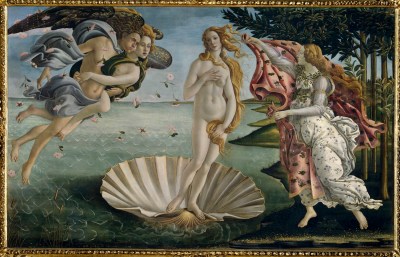
Sandro Botticelli,Birth of Venus, 1485–1486

Image Credit: Collection of the Uffizi Gallery, Florence, Italy. Digital image copyright © Alinari Archives/Raffaello Bencini/Art Resource, New York. It was rare to see a painted full-length nude in Sandro Botticelli’s day. Those that existed in Renaissance Italy usually showed something bad happening—Christ crucified, Adam and Eve being expelled from the Garden of Eden, or sinful naked people in a Last Judgment scene. Botticelli flipped the script, creating a nearly life-size nude illustrating the mythological story of Venus being born from sea foam, flanked by Zephyr and Chloris. Adopting an ancient Greek Venus pudica pose, Botticelli’s Venus is modest but unashamed in this grand humanistic celebration of the beauty of her form.
-
Leonardo da Vinci,Vitruvian Man, c. 1490

Image Credit: Collection of the Gallerie dell’Accademia, Venice, Italy. Digital image: Cameraphoto Arte, Venice/Art Resource, New York. If Botticelli inspired a shift toward a more humanistic approach to the nude, Leonardo da Vinci helped lead the charge toward more scientific depictions of the human form. In his iconic diagrammatic drawing Vitruvian Man, Da Vinci visualized a concept of human proportions based on an ancient architectural text by Vitruvius, which stated that a perfect circle and square could be drawn using the navel of an outstretched figure as the center. This would mean, for instance, that a man’s height was nearly equal to his arm span. With these and other calculations, thinkers like Da Vinci strove to understand ideal proportions in a combination of science and art.
-
Lavinia Fontana, Minerva Dressing, 1613

Image Credit: Collection of the Gallerie Borghese, Rome. Italian Mannerist artist Lavinia Fontana, considered one of the first Western women to paint professionally (outside a convent or court), changed what was considered acceptable subject matter for female painters. In an era when women were expected to limit themselves to painting portraits and religious scenes, Fontana daringly created nude Venuses and Minervas—including this Minerva Dressing, which is the first known female nude painted by a woman. As the human nude was considered a pinnacle of artistic achievement, it asserted Fontana’s capabilities and paved a path of greater artistic freedom for the women who followed her.
-
Édouard Manet,Olympia, 1863

Image Credit: Collection of the Musée d’Orsay, Paris. Why was Édouard Manet’s Olympia rehung high up and out of reach when it debuted at the 1865 Paris Salon, and why did some viewers try to pierce this canvas with umbrellas? Because Manet took the idealized and classical female nude and morphed it into something contemporary and profane. The composition references art history, resembling ancient Roman depictions of Venus and the reclining female nude in works such as Titian’s Venus of Urbino and Goya’s Maja desnuda—but Manet transformed her into a prostitute and gave her a typical courtesan name. Here, we are not gazing upon a passive woman; Olympia stares confrontationally at us, as though we might be her next patron.
-
Auguste Rodin,The Walking Man, modeled before 1900, cast before 1914

Image Credit: Collection of the Metropolitan Museum of Art, New York. Auguste Rodin was looking around his studio one day and found a cracked clay torso that he’d made two decades earlier. He decided to cast it in bronze and then mount it atop legs he’d fashioned for another sculpture entirely, the unexpected (and not quite anatomically correct) combination suggesting a vigorous stride forward. This headless, armless man broke with the established sculptural tradition of full-figure nudes and helped create a new style of fragmented and roughly textured sculptures. It thus cleared a path for modernist works such as Matisse’s Serf, Giacometti’s Homme qui marche, and Boccioni’s Unique Forms of Continuity in Space.
-
Paula Modersohn-Becker, Self-Portrait on Her Sixth Wedding Anniversary, 1906

Image Credit: Collection of the Paula Modersohn-Becker Museum, Bremen, Germany. Digital image: HIP/Art Resource, New York. In May 1906, German modernist artist Paula Modersohn-Becker faced a mirror to study her own unclothed body and painted the first known female nude self-portrait. In rendering herself, Modersohn-Becker eliminated the power play that often existed between a male artist and his model and also broke from the tradition of women being painted for the male gaze. Thirty years old at the time the painting was made, the artist wasn’t actually pregnant, even though she looks it; we see, instead, the fecund power of her creativity (which, sadly, was cut short when the artist died post-childbirth the following year).
-
Pablo Picasso,Les Demoiselles d’Avignon, 1907

Image Credit: Collection of the Museum of Modern Art, New York. Digital Image copyright © The Museum of Modern Art/Licensed by SCALA/Art Resource, New York. Artwork © 2026 Estate of Pablo Picasso/Artists Rights Society (ARS), New York. In his monumental canvas that spawned the birth of Cubism, Picasso reinvented not only Western painting but also the female nude. Gone were naturalism, illusionistic perspective, chiaroscuro, and traditional conventions of beauty; in this grouping of five sex workers on Barcelona’s infamous Avignon Street, Picasso brought flattened planes, sharp edges, and an angular approach to the human form. The shock value of the scandalous subject matter was rivaled only by the jarring style in which it was painted, as Picasso fractured the picture plane and introduced non-Western influences such as African, Iberian, and Oceanic masks. No wonder he waited nine years to publicly show this painting.
-
Marcel Duchamp,Nude Descending a Staircase No. 2, 1912

Image Credit: Collection of the Philadelphia Museum of Art. Digital image: The Philadelphia Museum of Art/Art Resource, New York. Artwork copyright © Association Marcel Duchamp/ADAGP, Paris/Artists Rights Society (ARS), New York 2026. “You’ve tried to find her, And you’ve looked in vain; Up the picture and down again, You’ve tried to fashion her of broken bits, And you’ve worked yourself into seventeen fits,” went a poem published in American Art News on the occasion of the 1913 Armory Show, where Marcel Duchamp’s Nude Descending a Staircase No. 2 notoriously made its American debut. This unconventional nude was shocking because he fragmented the figure into geometric shapes. Possibly inspired by the chronophotography of Eadweard Muybridge and Étienne-Jules Marey, Duchamp turned the female nude into something almost industrial. Pushing the limits even further, he made a No. 3 of this painting (a photographic enlargement that he reworked with graphite and ink) and a miniature fourth version for Carrie Stettheimer’s dollhouse, and he included replicas in his Boite-en-valise portable museums—treating the work as a sort of Duchampian readymade.
-
Amedeo Modigliani,Reclining Nude, 1917

Image Credit: Private collection. Digital image: HIP/Art Resource, New York. There’s no allegory or backstory in the roughly 26 large-scale, reclining female nudes that Amedeo Modigliani painted between 1916 and 1919. Inspired by art history but stripped of any context, they look like distant cousins of Renaissance Venuses and other idealized women but stand apart with their raw carnality (and pubic hair, which made them appear quasi-pornographic to viewers at the time). They were so dangerously sensual, in fact, that when they debuted in Paris at Galerie Berthe Weill in December 1917, the police arrived to remove one of them from the gallery window.
-
Hannah Höch, Monument II: Vanity (From an Ethnographic Museum), 1926

Image Credit: Collection of the Germanisches Nationalmuseum, Nuremberg, Germany. Digital image: bpk Bildagentur/Germanisches Nationalmuseum/Monika Runge/Art Resource, New York. Artwork copyright © 2026 Artists Rights Society (ARS), New York/VG Bild-Kunst, Bonn. Between 1925 and 1930, German Dada artist Hannah Höch created a photomontage series titled “From an Ethnographic Museum.” Evocative of fashion spreads in glossy magazines, these collages rendered idealized feminine beauty uncanny by creating hybrid figures that combined a Caucasian female body with a non-Western head (usually cut from photos of ethnographic specimens or African tribal objects brought home by German colonizers). The resulting images force viewers to confront the way we fetishize and objectify both the female form and these types of objects.
-
Yves Klein, Anthropometry, 1962

Image Credit: Collection of the Los Angeles County Museum of Art. Digital photo copyright © Museum Associates/LACMA. Licensed by Art Resource, New York. Artwork copyright © Succession Yves Klein c/o Artists Rights Society (ARS), New York/ADAGP, Paris 2026. When he wasn’t trademarking the color International Klein Blue, postwar French artist Yves Klein practiced judo and became interested in the markings left on the mat after a judo fighter fell. In 1958, attempting to translate this phenomenon into painting, he instructed a nude model to apply blue paint to herself and roll across a sheet of paper. This led, in 1960, to his “Anthropometry” series, in which he used nude women as “living brushes” during performances in front of live audiences, while his Monotone Symphony played in the background and blue cocktails were served. Though these works have been criticized for reducing women to instruments, the “Anthropometry” works eliminated the intermediary between the female form and its appearance on paper or canvas and innovatively expressed the nude body as color, as opposed to line or form.
-
Ana Mendieta, Untitled: Silueta Series, 1979

Image Credit: Artwork © The Estate of Ana Mendieta Collection, LLC. Licensed by Artists Rights Society (ARS), New York/Courtesy Marian Goodman Gallery. Like Yves Klein, Cuban-American artist Ana Mendieta used the nude body as an instrument for creating artworks, but with female agency. Her best-known project is her “Silueta”series of more than 200 “earth-body works” in which she photographed imprints or outlines of her own body in a natural setting. Frustrated with the limitations of painting, she saw these works as a way of connecting emotionally with the earth and returning to the maternal source. The traces of her absent nude body can be seen as a metaphor for her absence from her homeland, as Mendieta was forced to leave her native Cuba without her parents at the age of 12.
-
Mickalene Thomas, A Little Taste Outside of Love, 2007

Image Credit: Collection of the Brooklyn Museum. Digital image courtesy of the artist. Artwork copyright © 2026 Mickalene Thomas/Artists Rights Society (ARS), New York. Jean-Auguste-Dominique Ingres’sorientalist painting Grande Odalisque (1814) reimagined the reclining nude—a traditional theme in Western art—as an “odalisque,” a French terms taken from the Turkish word for domestic servant but taken by Western Europeans to mean an enslaved concubine. The decidedly different version that contemporary artist Mickalene Thomas created as a portrait of Maya, one of her first models, is an bejeweled image of the Black queer nude as feminine power. In this painting and others, Thomas turns her photographs and archival sources (such as the Black American magazine Jet) into monumental works endowed with disco-era glamor that fight against gender and beauty norms.
Newswire