
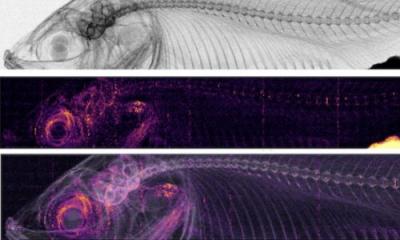
The new single-shot and motion-free method produces images that are more informative, low-dose and faster — helping to lower patients’ dose of radiation, which can be especially beneficial for children and small animals. The cost-effective design could be integrated into existing X-ray and CT systems with only minor modifications, making clinical translation feasible. The team’s next steps include adapting the system for small-animal studies and exploring clinical applications such as lung imaging and low-dose breast cancer screening. “We expect that this will become practical, translatable,” Das said.
Beyond medicine, the technique could transform imaging for industries that rely on detecting internal defects or microstructures. Potential applications range from the petroleum industry and rock analysis, materials research and real-time monitoring of chemical or structural changes in engineered components.
Das has long been at the forefront of imaging innovation, previously advancing methods that investigated the wave nature of X-rays and applying photon-counting detectors with novel algorithms to allow for more precise 3D visualization.