
nt
nttnt</div>n</div>nttt</div>ntttt</div>n”,”data”:[{“divId”:”gpt-dsk-tab-list-inlistx-uid3″,”displayType”:”medrec”,”targeting”:[{“key”:”pos”,”value”:”btf”},{“key”:”pos”,”value”:”mid”},{“key”:”pos”,”value”:”in-listX”}],”lazyLoad”:”no”,”lazyLoadMultiplier”:2,”zone”:”list/in-listX”,”sizes”:[[300,250],[300,251]]}]}},{“ID”:1234770829,”position”:4,”positionDisplay”:5,”date”:”2026-01-23 17:39:45″,”modified”:”2026-01-26 11:31:04″,”title”:”Frantz Fanon: Wretched of the Earth</em>, 1961″,”subtitle”:null,”slug”:”frantz-fanon-wretched-of-the-earth-1961″,”caption”:””,”description”:”ntttt
nnnnnnn
ntThis classic considers the psychological effects of colonization on several scales, from individual to societal. Here, the Martinican psychiatrist and philosopher is unambiguous: he describes colonization as land theft and frames land as more than mere proprerty. Land, instead, is essential for sustenence and human dignity, and to struggle against colonizers for land against is to fight dehumanization. Today, as critics cry neocolonialism regarding some of Smithsonu2019s interventions in unceded land, one wonders about the artistu2019s relationship to Fanonu2019s ideas.</p>n</div>”,”alt”:””,”image_credit”:”Grove Press”,”url”:”https://www.artnews.com/list/art-in-america/columns/robert-smithson-books-1234770823/”,”image_id”:1234770830,”image”:”https://www.artnews.com/wp-content/uploads/2026/01/71BagB0AFxL._AC_UF10001000_QL80_.jpg?w=679″,”sizes”:{“pmc-gallery-s”:{“src”:”https://www.artnews.com/wp-content/uploads/2026/01/71BagB0AFxL._AC_UF10001000_QL80_.jpg?w=163″,”width”:163,”height”:240},”pmc-gallery-m”:{“src”:”https://www.artnews.com/wp-content/uploads/2026/01/71BagB0AFxL._AC_UF10001000_QL80_.jpg?w=326″,”width”:326,”height”:480},”pmc-gallery-l”:{“src”:”https://www.artnews.com/wp-content/uploads/2026/01/71BagB0AFxL._AC_UF10001000_QL80_.jpg?w=407″,”width”:407,”height”:600},”pmc-gallery-xl”:{“src”:”https://www.artnews.com/wp-content/uploads/2026/01/71BagB0AFxL._AC_UF10001000_QL80_.jpg?w=521″,”width”:521,”height”:768},”pmc-gallery-xxl”:{“src”:”https://www.artnews.com/wp-content/uploads/2026/01/71BagB0AFxL._AC_UF10001000_QL80_.jpg?w=679″,”width”:679,”height”:1000}},”fullWidth”:390,”fullHeight”:575,”mime_type”:”image”,”ad”:””,”appleSongID”:null,”enableAppleGA”:false,”additionalDescription”:null,”subtitleColor”:null,”additionalSubtitle”:null,”additionalSubtitleColor”:null,”ads”:{“html”:”t
nttttt
nttttn
nt
nttnt</div>n</div>nttt</div>ntttt</div>n”,”data”:[{“divId”:”gpt-dsk-tab-list-inlistx-uid4″,”displayType”:”medrec”,”targeting”:[{“key”:”pos”,”value”:”btf”},{“key”:”pos”,”value”:”mid”},{“key”:”pos”,”value”:”in-listX”}],”lazyLoad”:”no”,”lazyLoadMultiplier”:2,”zone”:”list/in-listX”,”sizes”:[[300,250],[300,251]]}]}},{“ID”:1234770847,”position”:5,”positionDisplay”:6,”date”:”2026-01-23 18:08:20″,”modified”:”2026-01-26 12:31:07″,”title”:”Gustave Flaubert: Bibliomania</em>, 1837″,”subtitle”:null,”slug”:”gustave-flaubert-bibliomania-1837″,”caption”:””,”description”:”ntttt
nnnnnnn
ntSmithson was apparently a Flaubert fan: he kept seven of his books. He was also, of course, a bibliomaniacu2014though perhaps not to the degree of this novelu2019s protagonist. A monk-turned-bookseller, this titular character becomes fanatically obsessed with rare books until he is driven to madness and murder. Itu2019s a cautionary tale about the impulse to possess (and commodify) books as objects, thereby missing their point.</p>n</div>”,”alt”:””,”image_credit”:””,”url”:”https://www.artnews.com/list/art-in-america/columns/robert-smithson-books-1234770823/”,”image_id”:1234770848,”image”:”https://www.artnews.com/wp-content/uploads/2026/01/biblio.jpg?w=888″,”sizes”:{“pmc-gallery-s”:{“src”:”https://www.artnews.com/wp-content/uploads/2026/01/biblio.jpg?w=170″,”width”:170,”height”:240},”pmc-gallery-m”:{“src”:”https://www.artnews.com/wp-content/uploads/2026/01/biblio.jpg?w=341″,”width”:341,”height”:480},”pmc-gallery-l”:{“src”:”https://www.artnews.com/wp-content/uploads/2026/01/biblio.jpg?w=426″,”width”:426,”height”:600},”pmc-gallery-xl”:{“src”:”https://www.artnews.com/wp-content/uploads/2026/01/biblio.jpg?w=546″,”width”:546,”height”:768},”pmc-gallery-xxl”:{“src”:”https://www.artnews.com/wp-content/uploads/2026/01/biblio.jpg?w=727″,”width”:727,”height”:1024}},”fullWidth”:408,”fullHeight”:575,”mime_type”:”image”,”ad”:””,”appleSongID”:null,”enableAppleGA”:false,”additionalDescription”:null,”subtitleColor”:null,”additionalSubtitle”:null,”additionalSubtitleColor”:null}],”galleryCount”:”6″,”galleryID”:”1234770823″,”previousPageLink”:””,”nextPageLink”:””,”template”:”item-featured-image”,”ordering”:”asc”,”galleryTitle”:”6 Books on Robert Smithsonu2019s Shelf”,”isList”:”1″,”logo”:[],”i10n”:{“backToArticle”:”Back to Article”,”backToAllGalleries”:”Back to All Galleries”,”backToReview”:”Back to Review”,”backToAllReviews”:”Back to All Reviews”,”thumbnail”:”Thumbnails”,”nextSlide”:”Next Slide”,”prevSlide”:”Previous Slide”,”skipAd”:”Skip Ad”,”skipIn”:”Skip In”,”of”:”of”,”missingSomething”:”You’re missing something!”,”subscribeNow”:”Subscribe Now”,”next”:”Next”,”nextGallery”:”Next Gallery”,”closeThisMessage”:”Close this message”,”closeModal”:”Close Modal”,”closeGallery”:”Close Gallery”,”startSlideShow”:”Start Slideshow”,”lightBox”:”Lightbox”,”scrollUp”:”Scroll Up”,”scrollDown”:”Scroll Down”,”look”:”Look”,”readMore”:”Read More”,”showLess”:”Show Less”,”vertical”:{“photo”:”Photo”}},”ads”:{“rightRailGallery”:{“html”:”t
nttttt
nttttn
nt
nttnt</div>n</div>nttt</div>ntttt</div>n”,”data”:[{“divId”:”gpt-dsk-tab-horizontal-gallery-uid5″,”displayType”:”flexrec”,”targeting”:[{“key”:”pos”,”value”:”top”},{“key”:”pos”,”value”:”atf”},{“key”:”pos”,”value”:”rail-top”},{“key”:”viewable”,”value”:”yes”},{“key”:”pos”,”value”:”top”}],”lazyLoad”:”yes”,”lazyLoadMultiplier”:2,”zone”:”gallery-horizontal/right-rail”,”sizes”:[[300,600],[300,250]]}]}},”adsProvider”:”boomerang”,”railBottomAdRefreshInterval”:”2″,”adhesionAdRefreshInterval”:”2″,”adAfter”:null,”listAdFrequency”:”1″,”socialIconsUseMenu”:”1″,”socialIcons”:{“facebook”:[],”twitter”:[],”pinterest”:[],”tumblr”:[]},”twitterUserName”:”artnews”,”timestamp”:{“date”:”January 26, 2026, 12:31pm”,”datetime”:”2026-01-26T12:31:29-05:00″},”showThumbnails”:””,”siteTitle”:”ARTnews.com”,”siteUrl”:”/”,”pagePermalink”:”https://www.artnews.com/list/art-in-america/columns/robert-smithson-books-1234770823/”,”enableInterstitial”:null,”interstitialAdAfter”:null,”zoom”:””,”pinit”:null,”sponsored”:””,”sponsoredStyle”:[],”runwayMenu”:[],”mobileCloseButton”:””,”galleryFetchUrl”:null,”styles”:{“header-height”:”79px”,”theme-color”:”#d32531″,”vertical-album-image-margin-top”:”0″,”vertical-album-image-margin-right”:”1.25rem”,”vertical-album-image-margin-bottom”:”2.5rem”,”vertical-album-image-margin-left”:”0″,”vertical-headline-font-weight”:700,”vertical-caption-font-weight”:300,”vertical-subtitle-font-weight”:500,”vertical-player-font-weight”:500,”vertical-headline-font-family”:”inherit”,”vertical-caption-font-family”:”inherit”,”vertical-subtitle-font-family”:”inherit”,”vertical-player-font-family”:”inherit”,”vertical-max-image-width”:”inherit”,”horizontal-intro-card-font-family”:”inherit”},”forceSameEnding”:””,”subscriptionsLink”:””,”isMobile”:””,”listItemsPerPage”:”100″,”listItemStyles”:{“rankNumberStyle”:{“backgroundColor”:”#000000″,”color”:”#ffffff”},”videoPlayButtonStyle”:{“fill”:”rgba(0, 0, 0, 0.7)”,”stroke”:”#000000″,”strokeWidth”:”4px”},”videoPlayButtonHoverStyle”:{“stroke”:”#ffffff”,”strokeWidth”:”4px”},”videoPlayButtonIconStyle”:{“fill”:”#ffffff”},”shareButtonStyle”:{“backgroundColor”:”rgba(0, 0, 0, 0.8)”,”borderWidth”:”1px”,”borderColor”:”#444444″},”shareButtonIconStyle”:{“fill”:”#ffffff”},”paginationButtonStyle”:{“color”:”inherit”,”border”:”solid 1px #000″,”padding”:”10px 30px”,”fontWeight”:”700″}},”listNavBar”:{“minimumNumberOfItems”:20,”numberOfRangesAtMinWidth”:{“0″:5,”530″:7,”800″:10},”parentElementQuerySelector”:”.js-Header-contents”,”parentElementStyle”:{“transition”:”margin 250ms ease-in”,”marginBottom”:”55px”,”zIndex”:”9999″,”overflow”:”visible”},”containerElementAttributes”:{“id”:”pmc-gallery-list-nav-bar-container”,”className”:””,”style”:{“transition”:”opacity 500ms ease-in”,”position”:”absolute”,”top”:”100%”,”right”:”0″,”left”:”0″,”width”:”100%”,”height”:”40px”}},”renderElementAttributes”:{“id”:”pmc-gallery-list-nav-bar-render”,”className”:””,”style”:{“backgroundColor”:”#f7f7f7″,”color”:”black”,”height”:”100%”,”fontWeight”:”700″,”display”:”flex”,”alignItems”:”center”,”justifyContent”:”space-evenly”,”textAlign”:”center”,”fontSize”:”0.875rem”}},”rangeElementAttributes”:{“style”:{“color”:”gray”,”padding”:”4px 8px”}},”activeRangeElementAttributes”:{“style”:{“color”:”black”}},”progressBarElementAttributes”:{“style”:{“position”:”absolute”,”bottom”:”0″,”height”:”3px”,”width”:”100%”,”backgroundColor”:”var(–color-brand-primary)”,”transform”:”scaleX(0)”,”transformOrigin”:”left center”,”transition”:”transform 240ms cubic-bezier( 0.215, 0.610, 0.355, 1.000 )”,”willChange”:”transform”}},”generatedRanges”:{“0”:[{“indexStart”:0,”indexEnd”:1,”positionDisplayStart”:1,”positionDisplayEnd”:2,”link”:”https://www.artnews.com/list/art-in-america/columns/robert-smithson-books-1234770823/carl-jung-man-and-his-symbols-1964″},{“indexStart”:2,”indexEnd”:3,”positionDisplayStart”:3,”positionDisplayEnd”:4,”link”:”https://www.artnews.com/list/art-in-america/columns/robert-smithson-books-1234770823/lawrence-alloway-violent-america-the-movies-1946-1964-1971″},{“indexStart”:4,”indexEnd”:5,”positionDisplayStart”:5,”positionDisplayEnd”:6,”link”:”https://www.artnews.com/list/art-in-america/columns/robert-smithson-books-1234770823/frantz-fanon-wretched-of-the-earth-1961″}],”530″:[{“indexStart”:0,”indexEnd”:0,”positionDisplayStart”:1,”positionDisplayEnd”:1,”link”:”https://www.artnews.com/list/art-in-america/columns/robert-smithson-books-1234770823/carl-jung-man-and-his-symbols-1964″},{“indexStart”:1,”indexEnd”:1,”positionDisplayStart”:2,”positionDisplayEnd”:2,”link”:”https://www.artnews.com/list/art-in-america/columns/robert-smithson-books-1234770823/j-g-ballard-the-drought-1968″},{“indexStart”:2,”indexEnd”:2,”positionDisplayStart”:3,”positionDisplayEnd”:3,”link”:”https://www.artnews.com/list/art-in-america/columns/robert-smithson-books-1234770823/lawrence-alloway-violent-america-the-movies-1946-1964-1971″},{“indexStart”:3,”indexEnd”:3,”positionDisplayStart”:4,”positionDisplayEnd”:4,”link”:”https://www.artnews.com/list/art-in-america/columns/robert-smithson-books-1234770823/paul-gauguin-paul-gauguins-intimate-journals-1949″},{“indexStart”:4,”indexEnd”:4,”positionDisplayStart”:5,”positionDisplayEnd”:5,”link”:”https://www.artnews.com/list/art-in-america/columns/robert-smithson-books-1234770823/frantz-fanon-wretched-of-the-earth-1961″},{“indexStart”:5,”indexEnd”:5,”positionDisplayStart”:6,”positionDisplayEnd”:6,”link”:”https://www.artnews.com/list/art-in-america/columns/robert-smithson-books-1234770823/gustave-flaubert-bibliomania-1837″}],”800″:[{“indexStart”:0,”indexEnd”:0,”positionDisplayStart”:1,”positionDisplayEnd”:1,”link”:”https://www.artnews.com/list/art-in-america/columns/robert-smithson-books-1234770823/carl-jung-man-and-his-symbols-1964″},{“indexStart”:1,”indexEnd”:1,”positionDisplayStart”:2,”positionDisplayEnd”:2,”link”:”https://www.artnews.com/list/art-in-america/columns/robert-smithson-books-1234770823/j-g-ballard-the-drought-1968″},{“indexStart”:2,”indexEnd”:2,”positionDisplayStart”:3,”positionDisplayEnd”:3,”link”:”https://www.artnews.com/list/art-in-america/columns/robert-smithson-books-1234770823/lawrence-alloway-violent-america-the-movies-1946-1964-1971″},{“indexStart”:3,”indexEnd”:3,”positionDisplayStart”:4,”positionDisplayEnd”:4,”link”:”https://www.artnews.com/list/art-in-america/columns/robert-smithson-books-1234770823/paul-gauguin-paul-gauguins-intimate-journals-1949″},{“indexStart”:4,”indexEnd”:4,”positionDisplayStart”:5,”positionDisplayEnd”:5,”link”:”https://www.artnews.com/list/art-in-america/columns/robert-smithson-books-1234770823/frantz-fanon-wretched-of-the-earth-1961″},{“indexStart”:5,”indexEnd”:5,”positionDisplayStart”:6,”positionDisplayEnd”:6,”link”:”https://www.artnews.com/list/art-in-america/columns/robert-smithson-books-1234770823/gustave-flaubert-bibliomania-1837″}]}},”closeButtonLink”:”/”};
/* ]]> */
Skip to main content
Conrad Bakker’s 2014–19 installation recreating every book Robert Smithson’s library. The facsimiles are oil paint on carveed wood.
Courtesy Conrad Bakker
By the time Robert Smithson died in a plane crash in 1973, at the age of 35, he had amassed over 1,000 periodicals and books. Soon after his death, a graduate student catalogued each and every one—save for a few loaned to friends and never returned—and grouped the artist’s titles by genre before arranging them alphabetically.
Smithson, who was also a skilled and articulate writer, is perhaps best known for artworks that dabble in anthropology, archaeology, and Earth sciences. But he read widely: fiction and philosophy dominate his holdings. Smithson especially enjoyed modernist literature—Gertrude Stein, T. S. Eliot, Stéphane Mallarmé, and so on—as well as the writings of fellow travelers, like Jorge Luis Borges and Marguerite Duras.
The list below provides a sense of the breadth of his holdings, but its depth continues to inspire. Between 2014 and 2019, the artist Conrad Bakker recreated each volume, painting their covers in oil on blocks of carved wood. For the full list, you can consult his project or the exhibition catalogue for his 2004 show at the Museum of Contemporary Art in Los Angeles, edited by Connie Butler and Eugenie Tsai.
-
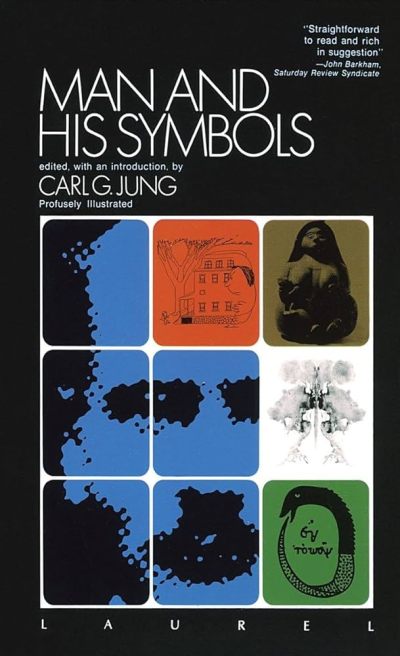
Carl Jung: Man and His Symbols, 1964

Image Credit: Dell Plenty of artists have this one. It’s Jung’s last book, and a landmark text on the unconscious mind. In it, the analyst sifts through symbols and the roles they play in our dreams before considering their effects on waking minds and artistic lives. Smithson had four other books by Jung, and lots of other books on symbols and their histories, including George Kubler’s The Shape of Time: Remarks on the History of Things (1962) and several by the art historian Erwin Panofsky.
-
J.G. Ballard: The Drought, 1968

Image Credit: Liveright Also published asThe Burning World, this apocalyptic novel explores a near-future where industrial waste covers the oceans, precipitating a durational drought. As the Earth dries up, humanity faces extinction, and Ballard focuses on the psychological and social collapses that ensue. It’s hard not to see Smithson’s fascination with entropy in this book. And as fate would have it, the 2012 reissue has a pinkish lake on the cover—one resembling the Great Salt Lake where Smithson’s Spiral Jetty (1970) resides, persisting through, though threatened by, a durational drought, as it were.
-
Lawrence Alloway: Violent America: The Movies, 1946-1964, 1971

Smithson’s library is filled with books on film—especially the French New Wave, including Agnès Varda and Chris Marker. Alloway’s book, which accompanied a film series he organized at the Museum of Modern Art in New York, makes a sharp yet nuanced case amid widespread complaints of violence in media.
-
Paul Gauguin: Paul Gauguin’s Intimate Journals, 1949

Image Credit: D.A.P. For a recent two-person exhibition at SITE Santa Fe, Latina artist Teresita Fernández took to challenging Smithson’s fascination with Mesoamerican cultures. And indeed, while his library is filled with volumes on Latin America, Native cultures, and the Caribbean, it is worth pointing out that his choice of authors leans overwhelmingly white and male. While writers of other demographics were underpublished in his time, it still seems worth considering whom he filtered his information through. Gauguin’s infamous relationship to Tahiti is often cited as the apotheosis of the dangers of exoticizing.
-
Frantz Fanon: Wretched of the Earth, 1961

Image Credit: Grove Press This classic considers the psychological effects of colonization on several scales, from individual to societal. Here, the Martinican psychiatrist and philosopher is unambiguous: he describes colonization as land theft and frames land as more than mere proprerty. Land, instead, is essential for sustenence and human dignity, and to struggle against colonizers for land against is to fight dehumanization. Today, as critics cry neocolonialism regarding some of Smithson’s interventions in unceded land, one wonders about the artist’s relationship to Fanon’s ideas.
-
Gustave Flaubert: Bibliomania, 1837

Smithson was apparently a Flaubert fan: he kept seven of his books. He was also, of course, a bibliomaniac—though perhaps not to the degree of this novel’s protagonist. A monk-turned-bookseller, this titular character becomes fanatically obsessed with rare books until he is driven to madness and murder. It’s a cautionary tale about the impulse to possess (and commodify) books as objects, thereby missing their point.
Newswire