
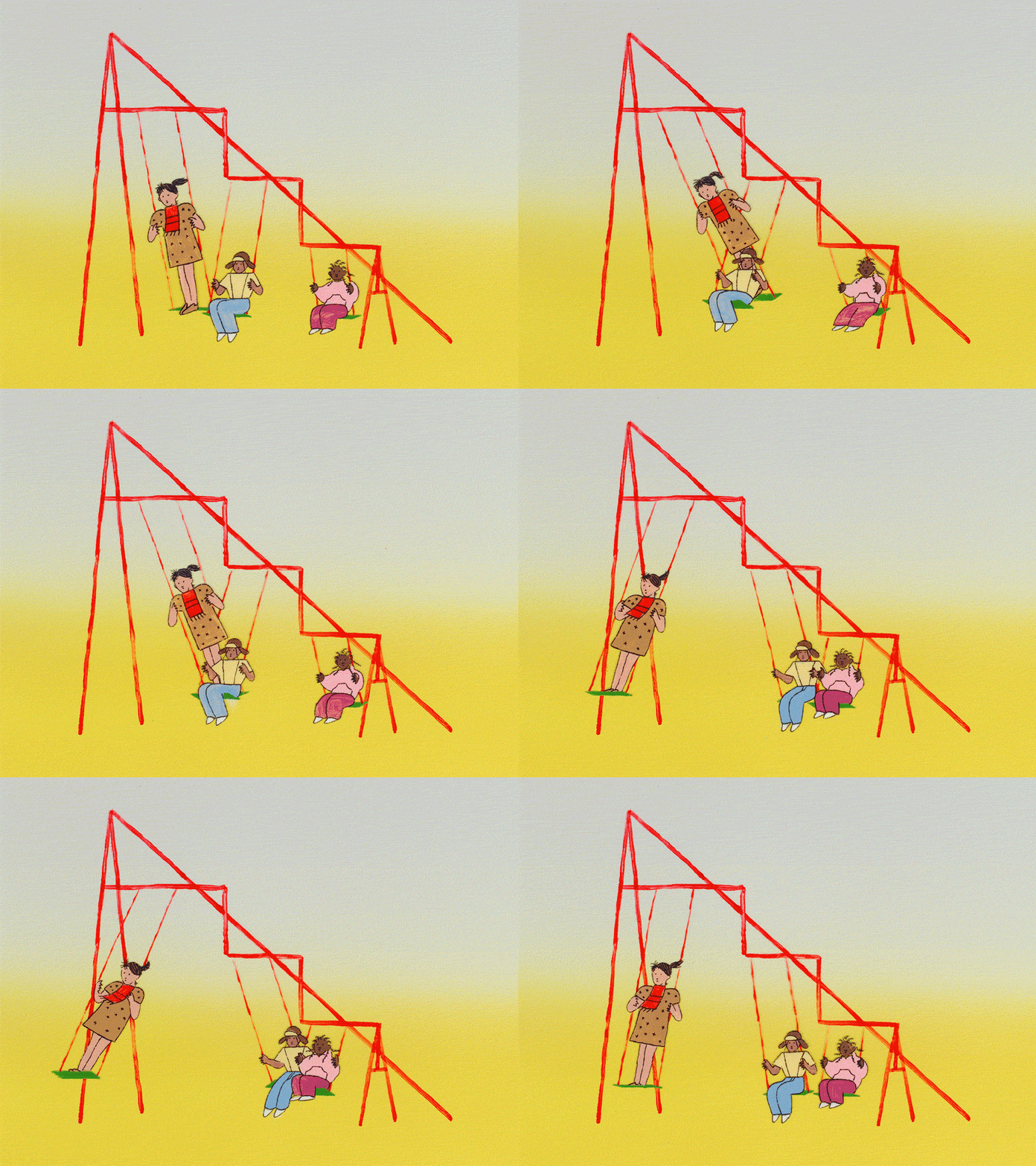
“I think of playgrounds as a primer of shapes and functions; simple, mysterious and evocative; thus educational,” Isamu Noguchi said in a pamphlet about his Playscapes. Perhaps best known for his stone sculptures and Akari lamps, the Japanese artist and designer always had an eye on the spaces that define childhood, particularly public playgrounds and their influence on the young mind.
In 1933, Noguchi proposed redeveloping an entire New York City block into “Play Mountain,” an enormous topographical project that would be unstructured and open-ended. Rather than have swings and swift metal slides, for example, Noguchi wanted earthen steps, a bandshell, and a large hill for sledding and gathering. The idea was that it could be just as fun in the winter as in the summer and stimulate kids’ imaginations more than the prescriptive equipment typical in urban parks. Then-Parks Commissioner Robert Moses rejected the plan, though, and despite efforts to have the project and others of Noguchi’s designs built in New York, none were ever realized in the city.
A series of short animations recreates this lesser-known history. Using hand-painted celluloid under a Rostrum camera, Eastend Western imagines what these never-built playgrounds would have looked like—and how children may have interacted with the unconventional structures. There are concrete mounds with cavernous openings, labyrinthine sand gardens, and asymmetrical equipment that could teach users that “the rate of swing is determined by the length of the pendulum,” the film says.
The animations were produced in conjunction with the exhibition Noguchi’s New York, which is on view through September 13 at The Noguchi Museum. There’s also a new monograph that dives into the artist’s playgrounds and is a companion to a major retrospective at the High Museum of Art, available for pre-order on Bookshop. Find the full film series on YouTube.