
To receiveMorning Linksin your inbox every weekday,signupfor ourBreakfast with ARTnewsnewsletter.
Good Morning!
- Museums across the Middle East are under threat amid bombing attacks.
- Seventy-five museum and biennial exhibitions to see this spring.
- Diya Vij has been selected to become commissioner of New York City’s Department of Cultural Affairs.
The Headlines
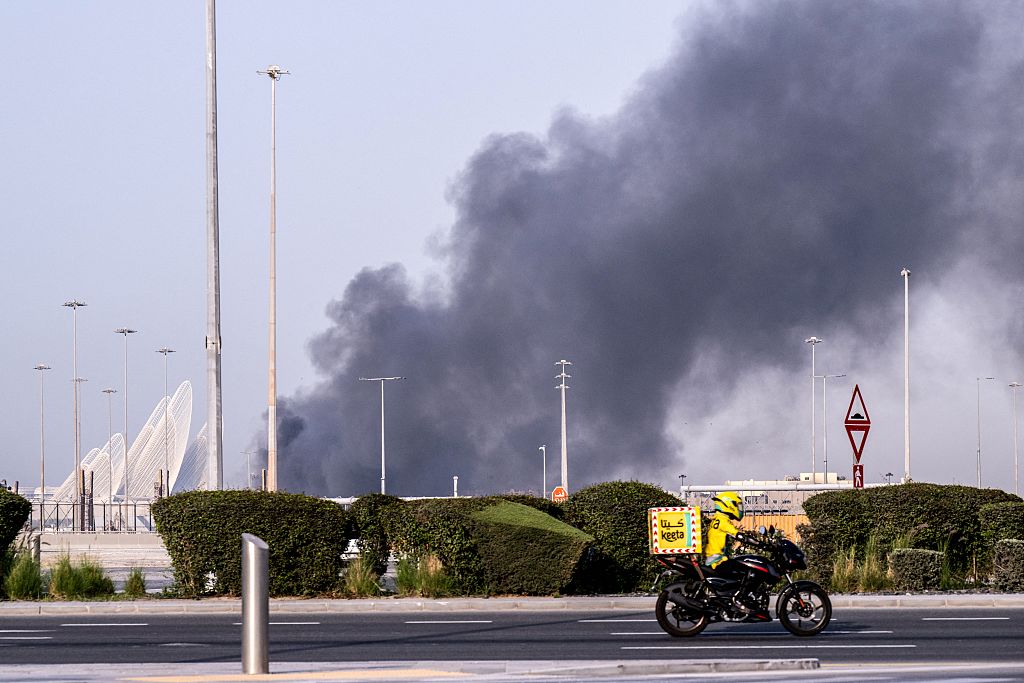
LINE OF FIRE.As the death toll rises amid a widening war in the Middle East, the region’s museums are also under threat. Iranian bombings of the United Arab Emirates, which began over the weekend, caused debris to fall on Abu Dhabi’s cultural center, Saadiyat Island, home to theLouvre Abu Dhabiand other institutions,Le Quotidien de l’Artreports. The museum is equipped with a fire-protected gallery that can double as a shelter in the event of an attack. However, the Jean Nouvel–designed building has no underground armored bomb shelters, raising concerns about potential damage to its holdings, including loaned artworks from the Louvre in Paris. Meanwhile, Qatar’s museums—notably theMuseum of Islamic Artand theNational Museum of Qatar—have closed as a precautionary measure, with no indication of when they will reopen.
ALL ROADS LEAD TO ITALY.ARTnewsSenior EditorAlex Greenbergerhascompiledthe 75 museum exhibitions and biennials to see this spring. From theVenice Biennaleopening in May to aRaphaelretrospective at theMetropolitan Museum of Art, andMichelangelosculptures shown alongsideRodinat theLouvre, Italian art forms a clear through line connecting this season’s events. The list is sure to keep art lovers busy—not to mention Italophiles. Here’s to more art and more amore.
The Digest
Diya Vij, current vice president of curatorial and arts programmes atPowerhouse Arts, has been tapped to be New York City’s nextDepartment of Cultural Affairs (DCA)commissioner. The hotly watched gig is one of the most important jobs in the city’s arts scene, as the DCA is the largest municipal funder of the arts in the US. [ARTnews]
A newly attributedRembrandttitledThe Vision of Zechariah in the Temple(1633) will be presented to the public starting March 4at theRijksmuseum,the institution announced today. Researchers were able to confirm the painting was by the 17th-century Dutch master thanks to advanced new technology. [Le Monde and AFP]
TheFrieze LAstand of the non-profitAmbos, which connects US-Mexican communities via art was relocated at the last minute to a spot away from the galleries, before the official entrance to the fair and near the coat check. “We feel like we’re being censored, racially profiled and discriminated against,” said Ambos founder and artistTanya Aguiñiga. [The Art Newspaper]
Heavy snow has crushed the iconicFly’s Eye Dome(patented in 1965) byBuckminster Fullerat the LongHouse Reserve sculpture garden in East Hampton, New York. The futuristic geodesic structure is one of only five existing versions and was designed as a model for portable housing. [Artnet News]
In awards news, theFoundation for Contemporary Arts (FCA)has awarded grants of $45,000 to 24 artists, including the Hong Kong-bornShirley Tse. Elsewhere,Tokyo Arts and Space (TOKAS)has honoredHan Ishuandyang02with the sixthTokyo Contemporary Art Award (TCAA), a prize of $19,000 each, plus up to $12,700 in additional funding, and a solo exhibition at theMuseum of Contemporary Art Tokyo (MOT). [ArtAsiaPacific]
The Kicker
SURVIVIN’ IN THE USA. InArt in America, critic Emily Watlington lights our way through this year’sWhitney Biennial,which looks at “the greater United States,” via artists from beyond strict national borders, to US-occupied Okinawa, Vietnam, Iraq, and more. She observes how the timely show swaps identity politics for the harder-to-perceive slew of infrastructural systems around us (i.e., imperial systems), which artists generously translate into sensations. Playful irreverence is also part of the mix, creating “an emotional ricochet that feels familiar from life lived online, where images of genocide and adorable animals follow one another in quick succession, and one tries to stay sane by remembering both registers coexist,” writes Watlington. But at its crux the show offers commentary on scale. In private life, humans tend to care for one another, “scale it up and systemize it, and cruelty and dehumanization too often ensue,” she writes. How to survive, then? Collaboration? Revolution? Or, as Watling suggests, “agency.”