
To receiveMorning Linksin your inbox every weekday,signupfor ourBreakfast with ARTnewsnewsletter.
Good morning!
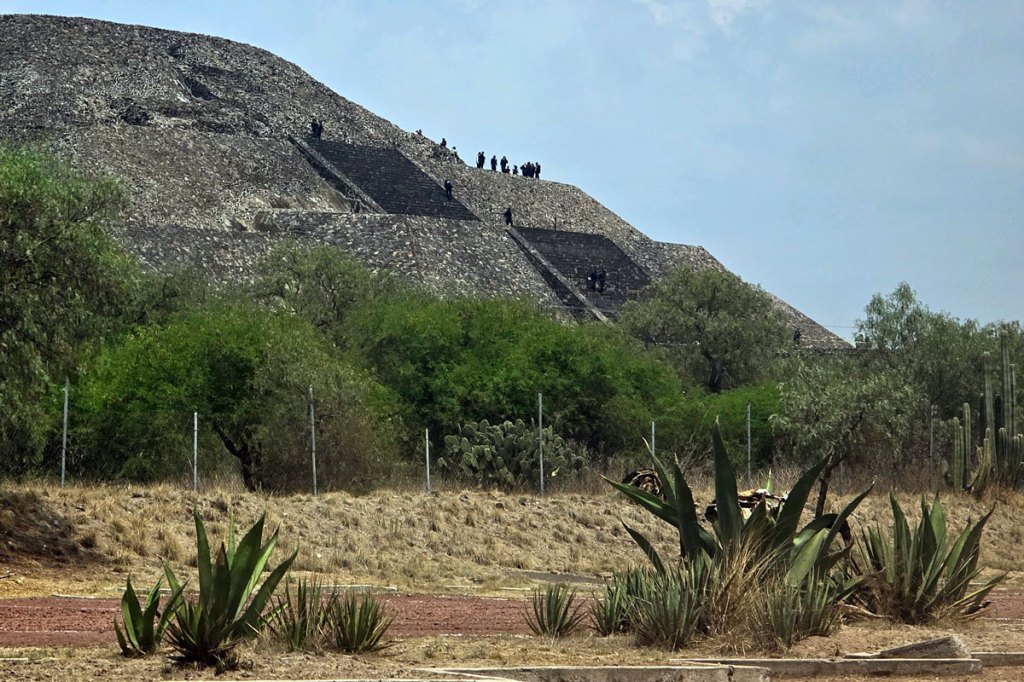
- A Canadian tourist was killed, and others injured in a shooting atop Mexico’s ancient Teotihuacán Pyramid of the Moon.
- The grandson of Diego Rivera, Juan Rafael Coronel Rivera, has gifted over 150,000 items to Mexico’s Museo Anahuacalli.
- A papyrus fragment of Homer’sIliadwas found inside an ancient Egyptian mummy, marking the first discovery of its kind.
The Headlines
TRAGEDY IN TEOTIHUACÁN. A Canadian woman was killed in a shooting Monday atop the ancientTeotihuacánPyramid of the Moon,just outside Mexico City, reports theNew York Times.In addition to the slain tourist, several other visitors from the United States, Brazil, and Colombia, including two children, were wounded when a man opened fire at the popularUNESCO World Heritage Site. He then killed himself. “What happened today in Teotihuacán pains us deeply,” said Mexican PresidentClaudia Sheinbaumon social media. The incident has raised security concerns ahead of this summer’sWorld Cup, when the ancient site will also play host to an immersive night show, according to theBBC.
ALL IN THE FAMILY. Diego Rivera’s grandson,Juan Rafael Coronel Rivera, has donated 157,300 objects from his personal collection to theMuseo Anahuacalliin Mexico City, which Rivera the elder had envisioned as part of a “city of the arts,” reports theArt Newspaper. The trove of items doesn’t contain paintings by Rivera, or his wifeFrida Kahlo, but it significantly expands the institution’s holdings with photographs, prints, ceramics, textiles, and documents, as well as letters from both artists’ personal libraries, as well as pre-Hispanic art, which forms the bulk of the museum’s displays. During his lifetime, Diego Rivera himself set up a trust with the Banco de México to keep the Museo Anahuacalli and theMuseo Frida Kahlo(aka theCasa Azul)open to the public. Rivera “conceived this museum not only as an exhibition space but as a place where collecting would be a form of knowledge,” said the museum’s director,Teresa Moya.
The Digest
In a first, archaeologists have found a papyrus fragment ofHomer’sIliadpreserved inside the gut of a Roman-era Egyptian mummy, located in present-day Al-Bahnasa, Egypt. [Independent]
For the first time in 97 years,Pierre-Auguste Renoir’sLa femme aux lilas (Portrait de Nini Lopez)will head to auction atChristie’son May 18, with an estimate of $25 million to $35 million. [ARTnews]
Metal detectorists in France are “erasing history” by removing objects from their archaeological context, according to French authorities; meanwhile, in England, they are seen as contributing to it. [Le Monde]
Diane Keaton’s personal belongings, including her unmistakable wardrobe, Hollywood ephemera, and art collection, are on their way to auction atBonhams. [Artnet News]
Pop starOlivia Rodrigo“invited herself” to theChateau de Versaillesin the filming of her music video for the song “Drop Dead,” commented French media. [Le Figaro]
Mikala Taihas been appointed curator of the 10thTarraWarra Biennial,which will open in July 2027. [ArtAsiaPacific]
The Kicker
WHERE WERE YOU?Through a selection of his personal photos, snapped at gallery dinners that served up platters of pig heads, or requisite nude performances, not to mention a real “Cocaine Buffet,” courtesy ofRob Pruitt,Jerry Saltzis taking readers through New York City’s bacchanal and scrappy art scene of the 1990’s, forNew York Magazine’s“The Yesteryear Issue.” Full of nostalgia—despite its flaws, such as the lack of celebrated women artists, with the notable exception of a youngTracey Emin, as well as a storiedElizabeth Peytonshow at the Chelsea Hotel—Saltz’s observations can also offer wisdom for today’s art world. The scale of the ’90s New York scene remained small, for instance, something that would spark concern today. But not that long ago, it facilitated buzzy gatherings around impactful exhibitions and art happenings. Before social media and mega international events and amid a recession that was “leveling the playing field,” per Saltz, the scene thrived by attracting an eclectic and curious world that shared a passion for art and was willing to try just about anything. Despite its drawbacks, Saltz’s depiction is enough to make you wish you were there, or at least, to feel proud to have been around for a sliver of it. As Saltz put it: “It was the greatest period of my life.”