
“We have not yet begun to utilize the museum as an instrument of cultural education.” Those words, from Alain Locke’s 1925 essay “The Legacy of the Ancestral Arts,” carry visitors through a set of newly installed permanent collection galleries at the Detroit Institute of Arts (DIA).
When he penned that text a century ago, Locke, the eminent philosopher of the Harlem Renaissance, spoke on what he viewed as the popular distortion of “the African spirit,” a caricature, he argued, that obscured the true character of its descendent: African American artistic expression. He characterized this creative temperament as “free, exuberant, emotional, sentimental and human” and shaped by African Americans’ “particular experience in America and the emotional upheaval of its trials and ordeals.”
In 1925, Jim Crow laws, while most prevalent in the South, had seeped into every aspect of American culture, including its art history. The museum of Locke’s imagination becomes an instrument of repair: correcting misread contexts; releasing cultures from stagnant encyclopedic silos; and insisting that even artists working in ancient traditions be recognized as citizens of the future. Left unevolved, the museum only bolsters an architecture of exclusion, one that dictates whose stories are told—and how.
This fall, the Detroit Institute of Arts gestured toward Locke’s ambitious vision of the potential of museums with its reinstalled African American galleries. They have beenrelocatedfrom the back of the museum to an unmissable spot beside Diego Rivera’s iconicDetroitIndustryMurals(1932–33). Complementing thisdisplay is“Contemporary Anishinaabe Art: A Continuum” (through April 5), the first comprehensive survey of art from the Indigenous inhabitants of the Great Lakes region.
“It’spart of our DNA, our internal philosophy that we are always looking for different perspectives,” SalvadorSalort-Pons, themuseum’sdirector since 2015, toldARTnewsduring a recent visit. Among the shows he has ushered inwas last year’s “The Art of Dining,”a visual exploration of food culture in the Islamic world—a nod to Dearborn, Michigan’s prominent Arab American community.
Yet between the DIA and the localaudienceitdesiresto draw into its gallerieslies a great deal of history. Established by local titans of industry in 1885, the DIAboasts one of the country’s most esteemed art collections, but as the city’s prominencewanedover decades,sotoodidthemuseum’s.Detroititselfis nowamida polarizing revitalization, which beganroughly inthe early aughts and accelerated after the city’s 2013 bankruptcy. Part of this change has to do with acknowledging Detroit’shistory, which includes “informal butenforced” segregation practices that discouraged Black Detroiters fromshapingcultural spaces in the 20th century, and the fact it sits on the unceded homelands of the Anishinaabe, including the Ojibwe, Odawa, and Potawatomi people.
But first, the DIA needs to get Detroiters through the door.
The DIA was among the first museums anywhere to build andexhibita collection of African American art, which it began in1943. In 2001 it became the first US museum to name a curator devoted to that field in Valerie J. Mercer, who still serves as the museum’s curator and head of African American art. The collection she’s helped amass is undeniably extraordinary and now numbersroughly 700works spanning painting, print, sculpture, and functional arts, like Thomas Day’s wood and black horsehairSofa(ca. 1840). This handsome object, pristinely preserved, isone ofDay’sfewsurviving designs in publichands. “When I came [to the DIA] not much of the African American collection was on view,” Mercer said. “That was the reason forestablishingthe center. The museum wanted African Americans to feel that this was their museum as well—that they were seen by it.”

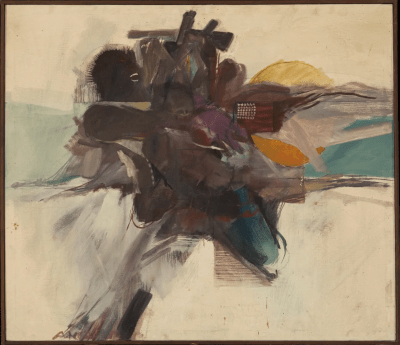
The four reinstalled galleries, officially titled “Reimagine African American Art,” chart two centuries of Black artistic achievement, starting in the mid-19th century when landscape painter Robert S. Duncan and sculptor Edmonia Lewis carved out places in the professional art world. The exhibition continues into the 20th century, looking at the Great Migration and its cultural afterlife;the Harlem Renaissance in the 1920s and ’30s;and the Civil Rights and Black Arts movements in the postwar era. The exhibition also looks at Black artists who left the US for Europe, finding that continent a more hospitable place to grow. Together, these galleries form a visual record thatshows“history is not thepast. It is the present,” as James Baldwin once put it.(His words are alsoreproduced on one gallery wall.) “With these galleries, I wanted to be able to tell a history of African American art.To me, African American art is the missing link from Americanart, as much as its true for other cultures in America,” said Mercer. “I mean, I never learned African American history, my education is very Eurocentric. History helps people anchorartworks;it helps them make some kind of sense.” That history includes how these artists persistedin makingtheir art. Take Charles McGee (1924–2021), the South Carolina–born painter who became one of Detroit’s greats. When McGee was 10 years old, his grandparents made the Herculean bet thatlife upNorth would be better than the share-cropping system of the post-Reconstruction South. They joined the Great Migration—the largest, fastest internal ethnic movement in US history. McGee would go on to paint works likeSpectral Rhythms(ca. early 1970s), an epic Color Field abstraction in which vast, luminous music notes drift toward an alien horizon.
AndGreat Migration stories like those of McGee and his family are also visually represented in the exhibition. Hughie Lee-Smith’sThePiper(1953), for example, shows a childplayinghis music with only a crumbling brick wall for company. “It’s more than a picture of a boy playing a recorder,” Mercer said. “It’sabout the alienation and the hope African Americans carried when they moved from the South to the North. The Northwasn’tpaved in gold—they found a new set of problems. That boy embodies all of it.”

While the DIA’s reinstalled African American galleries follow a more conventional approach to their display, opting to display work chronologically, the museum hits its stride in the presentation of work by Lewis, who is not only shown in these galleries but in “Contemporary Anishinaabe Art: A Continuum.” Born in 1844, she was a sculptor of African American and Native American (Mississauga Ojibwe) heritage who depicted people of color in a neoclassical style that was on its way out at the time—but which now reads as uncannily ahead of the figurative revival of the 2010s. On view hereisa stately portrait of William Lloyd Garrison, the abolitionist leader, and an even more scintillating bust of Hiawatha, the protagonist of Henry Wadsworth’s 1855 epochal poem. Placing her in varied contextsisn’tjust a curatorial gesture;it’san affirmation of the cultural crossings that make up the fabric of the United States—a reminder that museums can choose to tell complex stories of race and migration. Denene De Quintal, the museum’s first curator of Native American art in decades, organized “Contemporary Anishinaabe Art: A Continuum” with the same insistence that Indigenous art is not an aesthetic monolith. “There’s a lot of work to do to bring [the museum] up to best practices for exhibiting Native American art in an institution and part of that was providing information aboutthe community and its diaspora,” De Quintal said. She worked with an Anishinaabe advisory group to shape the presentation—a rarity for both the DIA, which hadn’t staged an exhibition of Indigenous art of comparable scale in 30 years, and for any major museum, which, in her words, “are used to having authority,” over their curation, to the detriment ofhow thisart historyis investigated. In the exhibition,more than 60 artists rebuff the popular imagination of Native art, andaccordingly, visitors will find no stylized teepees, Plains bison, pine-peaked mountains there, or natural history museum–esquecrowded glass cases. The gallery walls—painted deep blue and flecked with white to mimic the night sky or moonlight hitting water—echo that sentiment: the Anishinaabe belong to the Great Lakes, and the lakes to them.

Theart onview is as varied as the artists. David Dominic Jr. (Little Traverse Bay Band of Odawa Indians)’s photograph of Detroit legend Iggy Pop is paired with thePunk Rockers Nancy and Andy(1989), a dense acrylic painting by the late Norval Morrisseau(BingwiNeyaashiAnishinaabekFirst Nation)that is unlike the cosmological canvases for which he is better recognized. Nearby is Jonathon Thunder (Red Lake Band of Ojibwe)’s 15-foot-wide, magenta-hued paintingBasil’s Dream(2024), in which Thunderbird, a powerful guardian spirit, plays pool withMishipeshu, a panther-like spirit, while a DJ, channeling here the spirit ofDigital Underground, spinsrecordsnearby. The work is an ode to Anishinaabe storyteller Basil Johnston, who sits at a typewriter to the left of the billiards table. “[Thunder] put in one conversation the many influences that Native American artists have, not just from their own culture and background,” De Quintal said, adding, “It’sNative American,African American, Latinx—thispainting speaksto having multiple perspectives from diverse world viewpoints.” The expertise of the Anishinaabe advisory group shines through in the diversity of objects on view, from Dennis Esquivel’s stunning cabinet of maple and cherry wood titledOut of the Woodlands(2019), which has Ottawa war clubs for legs, to Jillian Waterman’sIn Case of Emergency Bury Me and Watch Me Grow(2024), an ensemble of vest, purse, and gas mask, all beaded with red, white, and yellow corn seeds. Functional objects are given ample space and light—qualities that unconsciously make art look contemporary—like the exquisitely decorated canoesfrom the collection ofChippewa craftsman Ronald J. Paquin andKellyChurch(Match‑e-be-nash-she-wish Band of Pottawatomi)each perched on a pedestal in the center of its gallery.

Churchhelped advise the DIA on which artists to include in the show.“Most art exhibitions just take people that they know.Curatorsaren’tlikely to know many Native artists, because most are out there in the bigger world, doingsomething,” she said, noting, for example,artists who aresingle motherswhodon’thave the financial freedom to mount an art exhibition.“This was an opportunity to suggest artists that we know are doing contemporary, museum-quality work. People that have stories to share that justhadn’tbeen seen,” she said. Grounded in their traditions,these artist makeunmistakably individualworkthatswings from celebrationand,elegy,to protest andrage. Horses Strickland’sRight toConsciousness(2024), a monumental canvas, depicts a groupofOjibwe people defending themselves from a deadly assault. In the caption, Strickland provides a blunt directive: “Do not let the lack of film and photographs take away from the fact that there was a genocide.” Ojibwe Two-Spirit designerNonamey’sDress for Nookomis(2023), painted blood red and outlined in black and white, stands as an emblem of the Missing and Murdered Indigenous Women and Relatives movement, which raises awareness about the disproportionate degree of violence committed against Native American and First Nations women. “It exists between worlds—part textile, part memory, part protest,”Nonameysays in an accompanying video.
“There’s always morehistoriesto tell,” Church said. “We have our First Nations brothers and sisters, up north too. We acknowledge them in the show with Edmonia[Lewis]andNorval[Morrisseau]. I hope that this is just a spark that sparks a lot of ideas in other people’s minds.”

During my visit earlier this fall,Patrick DesJarlait’s 1946 watercolor paintingMaple Sugar Time (Red Lake Band of Ojibwe)brought the experienceof visiting thisupdated version of the DIA—full circle.The work’smuscular characters harvest and process maple sap with a mechanical grace that recalls Rivera’sDetroitIndustryMurals, revealing a metaphorical thread of human labor, craft, and theparticular strengthof willrequiredto thrive despite America’s structural inequities. Thislabor of imagination is an assertion of selfhood, whether that effort is spiritual, migratory, or aesthetic. Locke’svisionaryidealof what a museum can bepointsto the same:amuseum that celebrates not just the art on its walls, but the people who brought it there.
That visionisn’ta theory, but a practical matter for the DIA. Its workers are awaiting a union contract, calling for “the values of community, creativity, and dignity” to be “reflected not just in the art on display but in the workplace itself.” The DIA has achieved a rare feat with its presentations: making art history feel unexpected, and so,truer to life. What immediate change it chooses for its closest community—that’sa story Detroitwon’tforget.