
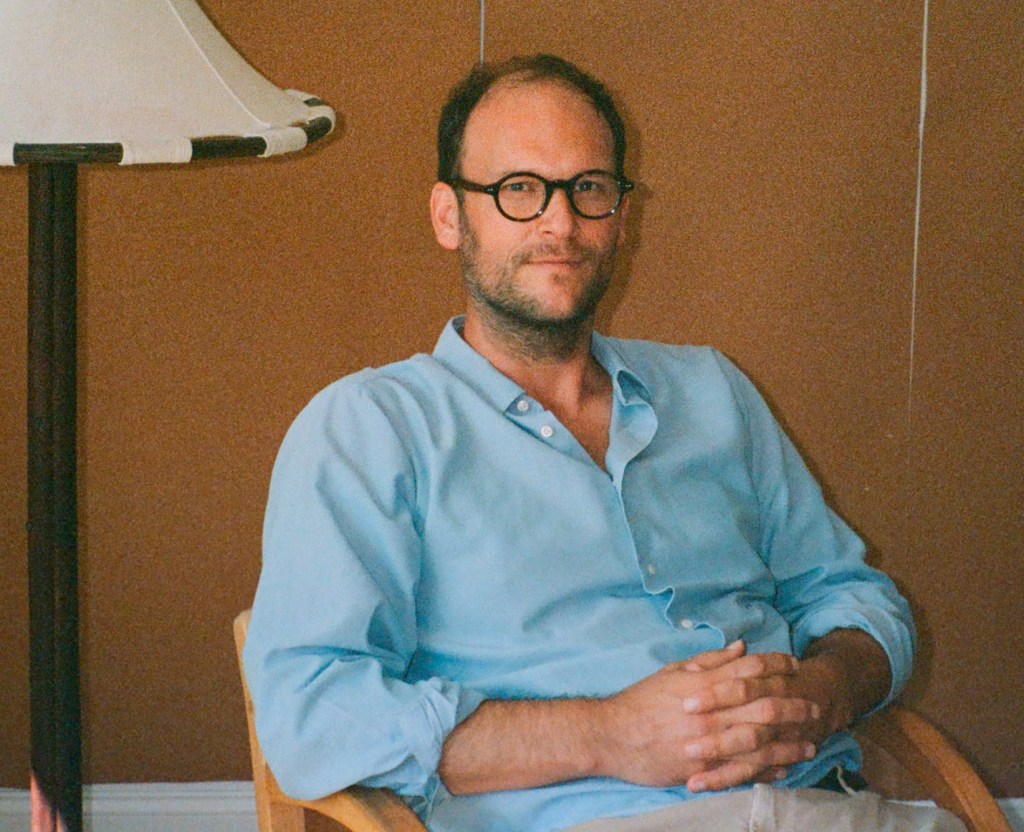
Timo Kappellerhas joined Pace Gallery as a senior director in New York, where he will focus on sales and artist relationships, the gallery announced this week. He begins the role on January 20.
Kappeller arrives at Pace after three years as artistic director of The Campus, the collaborative exhibition space in upstate New York operated by Bortolami, James Cohan, Kaufmann Repetto, Anton Kern, Andrew Kreps, and Kurimanzutto. Before that, he held senior positions at Hauser & Wirth and Andrew Kreps, and began his career in Europe, including early roles tied to Documenta in Kassel, Germany, and the KW Institute for Contemporary Art in Berlin.
Kappeller’s hiring comes after several notable departures from Pace’s top brass over the past two years. Last September, senior vice president Jessie Washburne-Harris left Pace for the role of global director of White Cube. That was followed by news in November that artist Yoshitomo Nara would depart the gallery’s roster for that of David Zwirner, in a deal brokered by Joe Baptista, who had been a partner at Pace until 2025. In 2024, Gary Waterson, who had recently joined the gallery as executive vice president of global sales and operations, was among three staffers let go.
The move marks a return to a sales-focused role within the art market for Kappeller, though he frames it less as a shift than a continuation. Across his career, he has moved between exhibition-making, sales, and institutional contexts, often occupying a space where those categories blur.
“I’ve always been interested in following artists’ trajectories and helping communicate the work as clearly as possible,” Kappeller said.
At Pace, that translates into staying close to artists while thinking carefully about how their work moves—between studios, collectors, and institutions—without letting short-term demand dictate long-term decisions. Kappeller said he is particularly aligned with Pace’s emphasis on managing careers patiently, rather than pushing prices upward at the first sign of attention.
That long-view approach also shapes how he sees the market right now. While much of the conversation in recent years has focused on younger buyers and emerging names, Kappeller pointed to what he sees as a growing opportunity around mid-career artists—figures who have been producing serious work for decades but were never fully carried by earlier market cycles.
“There’s huge potential there,” he said, describing a moment when galleries and collectors are beginning to look back at artists whose relevance never disappeared, even if visibility did.
In announcing the appointment, Pace president Samanthe Rubell said Kappeller’s experience across galleries and institutions strengthens the gallery’s ability to support artists at different stages of their careers. She emphasized Kappeller’s long-standing relationships with artists and collectors, as well as his sensitivity to artistic practice, as assets to the New York team.
Kappeller’s background in Europe also aligns with Pace’s broader international strategy, particularly as the gallery continues to expand its footprint in German-speaking regions (the gallery opened a Berlin outpost last year) alongside its long-standing presence in New York and other global hubs.