
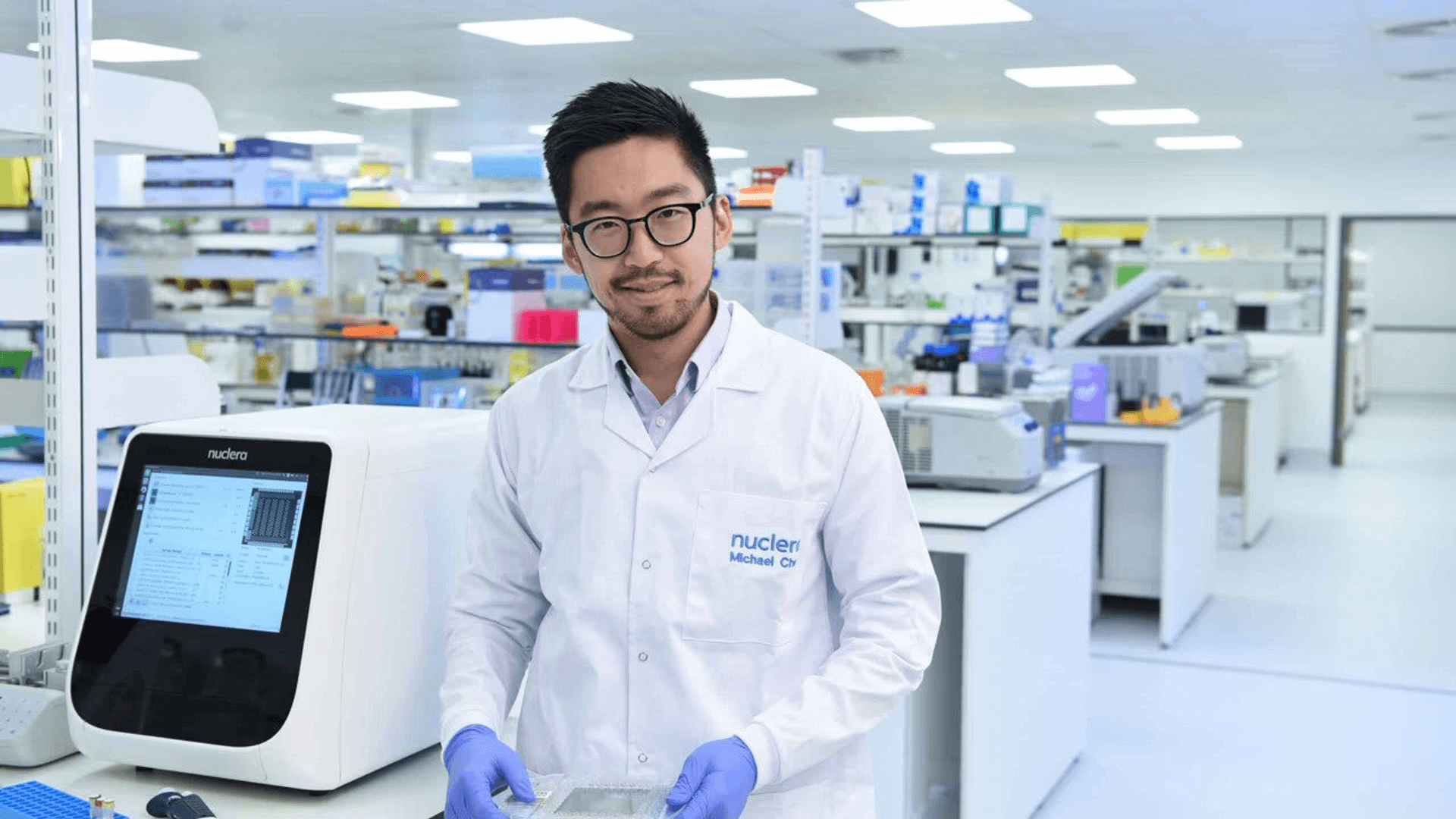
Biotech company Nuclera has secured an
additional $12 million in financing, bringing its total Series C funding to $87
million. The extension was led by Elevage Medical Technologies and Jonathan
Milner, with participation from existing investors British Business Bank and GK
Goh.
Nuclera is focused on streamlining
protein expression and purification workflows through its benchtop system,
eProtein Discovery, with the aim of improving access to proteins for drug
discovery research. By integrating cell-free expression systems, digital
microfluidics, and comprehensive screening data, the platform helps identify
promising protein candidates early, supporting more efficient development while
reducing time, cost, and uncertainty.
As part of its expansion into
AI-enabled protein engineering, the company plans to extend eProtein Discovery
with antibody-specific capabilities. This will enable researchers to perform
end-to-end expression, purification, and binding validation of full-format
antibodies within a single, integrated high-throughput system, while also
supporting the generation of scalable, standardised, high-quality datasets for
training advanced AI models in biologics research.
According to CEO and co-founder Dr. Michael Chen, the new funding reflects the company’s momentum and its strategy
to position eProtein Discovery within one of the fastest-growing segments of
biologics R&D. He added:
Scientists increasingly
require scalable, high-quality datasets to power AI models in biologics
discovery. We are positioning Nuclera to become a foundational platform for the
future of protein and antibody engineering, ultimately accelerating therapeutic
discovery timelines.
The investment will further support the integration of
antibody expression and binding validation capabilities into the eProtein
Discovery system, enabling in-house multiplex protein screening,
characterisation, and expression.