
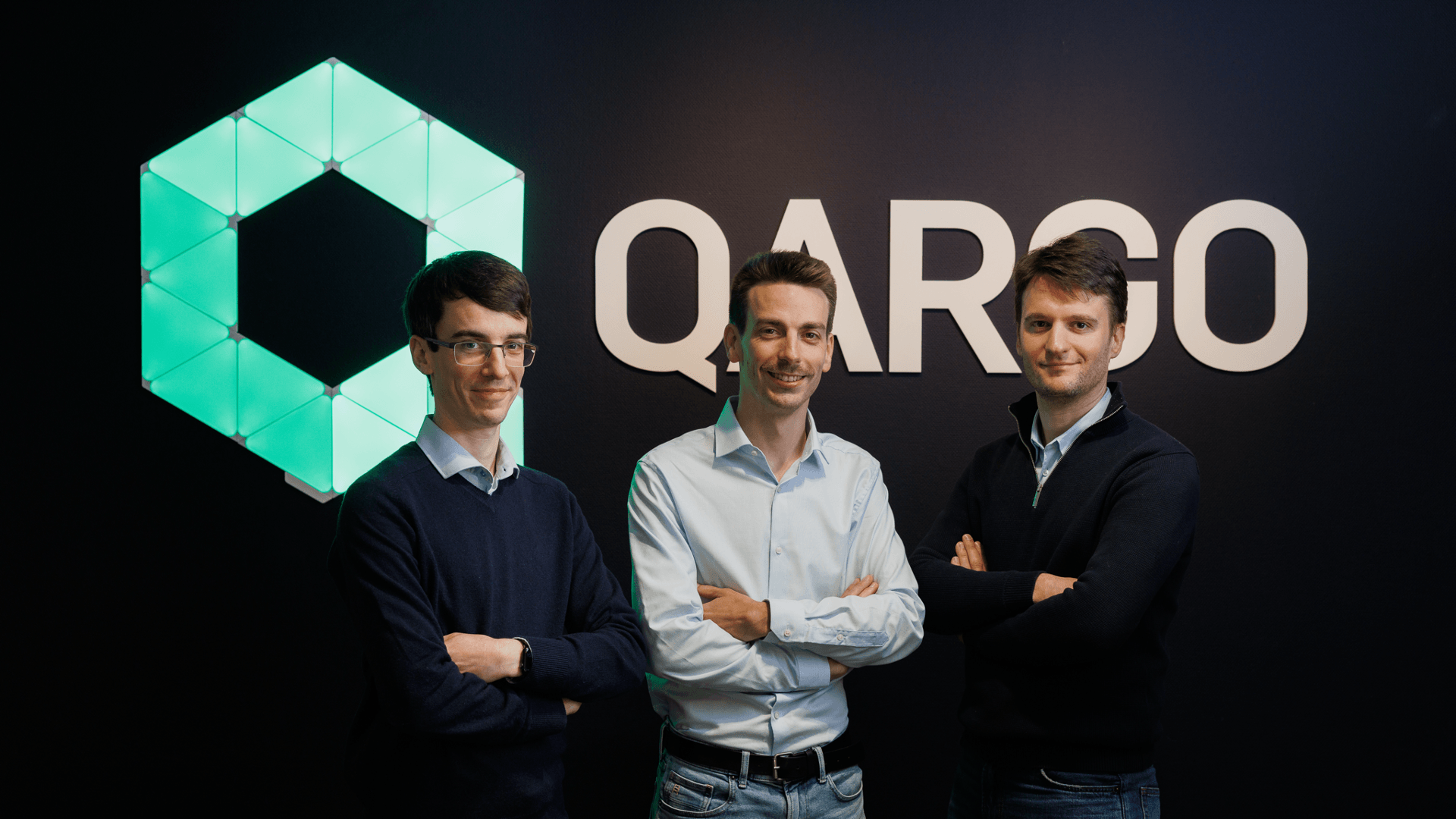
Qargo, an
intelligent transport management system (TMS), has raised $33 million in a
Series B funding round led by Sofina, with participation from existing investor
Balderton Capital. The round follows Qargo’s rapid expansion across key
European logistics hubs over the last 18 months. This latest investment brings
Qargo’s total funding to $54 million.
Founded in 2020,
Qargo is a cloud-based transport management platform designed for carriers,
freight forwarders, and 3PLs. It helps logistics companies digitise operations
and automate manual tasks across the transport cycle, from order entry and
planning to load building, invoicing, and reporting. The platform integrates
with existing tools to support more efficient and profitable operations, reduce
environmental impact, and enable scalable growth.
Qargo Intelligence,
the platform’s AI engine, enables logistics companies to automate large parts
of the end-to-end transport workflow, including order creation, route planning,
trip optimisation, load building, invoicing, and warehouse time-slot booking.
This automation has helped customers reduce time spent on repetitive
administrative tasks by up to 75 per cent, saving hundreds of hours each week
across planning, customer service, and back-office teams.
With the addition of
agentic AI that can interact with external systems, Qargo’s platform is
significantly reducing overhead costs and accelerating processes at a scale
that traditional TMS systems cannot match. Its optimisation capabilities, which
help companies run fleets more efficiently, can cut empty running by up to 30
per cent, a key advantage in a market where margins are under pressure from
competition, decarbonisation requirements, and rising cybersecurity risks.
Since its Series A
in May 2024, Qargo’s growth has accelerated, with annual customer invoicing
processed through the platform increasing from £420 million to more than £1.9
billion, and its customer base expanding from around 100 to more than 400.
The
Series B funding will enable Qargo to further scale its team, expand into new
markets, and accelerate the development of its AI-driven product capabilities,
while maintaining its independence and ability to partner with companies
ranging from family-run firms to large enterprises.