
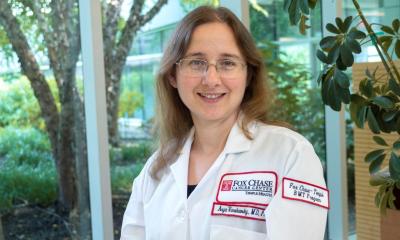
Asya Varshavsky-Yanovsky, MD, PhD, an Associate Professor in the Blood Cancer and Cellular Therapy Institute at Fox Chase Cancer Center
Image source: Fox Chase Cancer Center
The study, presented at the 67th American Society of Hematology (ASH) Annual Meeting and Exposition, showed that a structured outpatient model significantly reduced the number of days patients spent in the hospital, with no negative outcomes.
“There are multiple benefits to our approach,” said first author Asya Varshavsky-Yanovsky, MD, PhD, an Associate Professor in the Blood Cancer and Cellular Therapy Institute at Fox Chase. “These include decreased disruption to the patient’s normal life, reduced exposure to the risks of hospitalization, optimizing the utilization of inpatient beds, and of course healthcare costs.”
With a growing number of patients benefiting from T-cell redirecting therapies, it’s important to find strategies to treat more patients with existing resources, she added.
T-cell redirecting therapies, including CAR-T and bispecific T cell engagers (BiTEs), are a type of immunotherapy that supercharges the patient’s immune system to fight cancer. While these therapies have been a game-changing treatment option for patients with blood cancers like lymphoma and multiple myeloma, they can also cause potentially severe side effects triggered by an overactive immune response. While these therapies were just emerging, inpatient monitoring was appropriate, Varshavsky-Yanovsky said. Researchers wanted to know if outpatient observation could be done safely now that the therapies’ toxicities are better understood.