
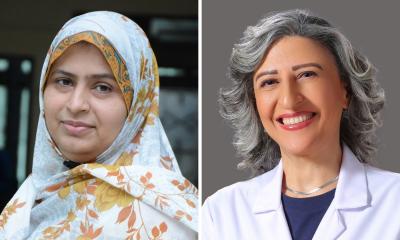
Brain tumour diagnostic challenges
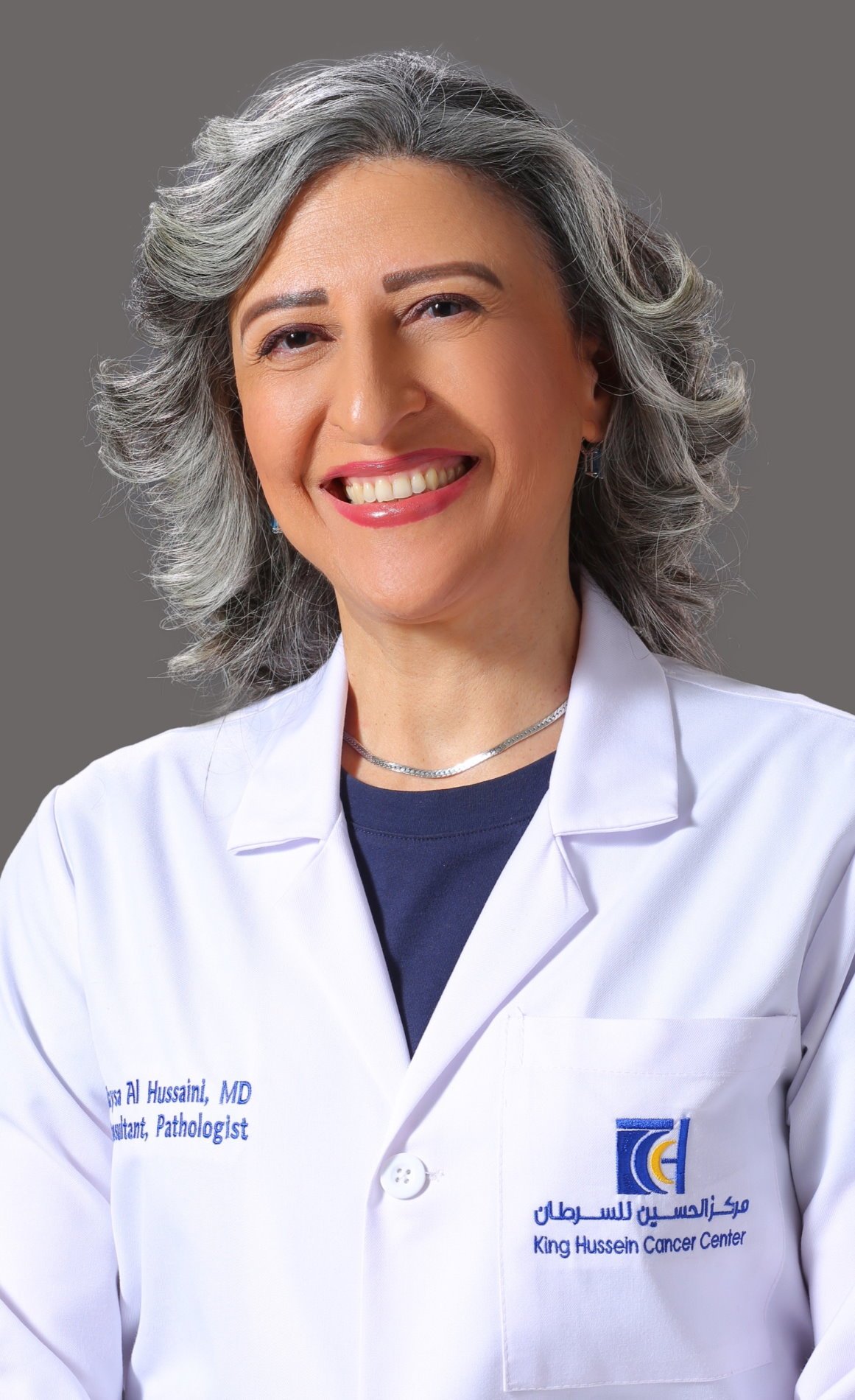
Dr Maysa Al-Hussaini
Image source: King Hussein Cancer Foundation and Cancer Center
Dr Maysa Al-Hussaini, Acting Chair of the Department of Cell Therapy and Applied Genomics, and a Neuropathologist at the King Hussein Cancer Center in Jordan, looked at the epidemiology of Central Nervous System (CNS) tumours, the most common tumour related cause of death in young people, and the challenges faced in low-resource settings, particularly in Asia and Africa. She shared findings from the Asian Oceanic Society of Neuropathology (AOSNP) Survey, looking at availability of molecular diagnostics in low, low-middle, high-middle and high-income countries within the Oceanian Region.
The AOSNP-ADAPTR (Adapting Diagnostic Approaches for Practical Taxonomy in Resource-Restrained Regions)1 found challenges to WHO CNS5, the World Health Organization’s 2021 classification for CNS tumours that integrated molecular diagnostics with traditional histological and immunohistochemical findings, in lower resource settings. These included lack of infrastructure, consumables, skilled personnel, validation, access to treatment, and cost.
Missing: Infrastructure, funding, training
In a study conducted by African and Asian neurosurgeons, 110 responses received from 92 countries within the Asian African region, showed that molecular diagnostics was not available. ‘Neuropathology and financial support stood as the major hinders for assigning or having a complete brain tumour programme,’ she said. ‘Twinning and training were proposed as possible solutions in order to overcome the shortage of molecular diagnostics.’
One third of African countries and institutions did not even have basic components for a neurosurgical programme. Further research underlined the lack of finance, molecular diagnostics and insufficient training.
The survey conducted by the AOSNP received 318 responses from institutions across 19 countries within the Asia-Oceania region and showed that basic and advanced molecular diagnostics was not available.
She said the AOSNP was establishing guidelines to support neuropathologists and neurosurgeons in such regions. ‘What we hope for is to have histology-oriented integrated diagnosis rather than for the integrated diagnosis to be only based on molecular diagnostics and some basic immunohistochemistry in order to help the pathologist and treating physician to reach the correct diagnosis,’ Al-Hussaini explained. ‘But there is a gap in the availability of diagnostic and treatment resources globally.’
The AOSNP-ADAPTR recommendations represent a response to an urgent need to address levels of resourcing and aim to ‘narrow the gap between better and less resourced countries.’
Profiles:
Dr Talat Zehra is Associate Professor at Liaquat National Hospital Medical College in Karachi, Pakistan.
Dr Maysa Al-Hussaini is Full Member, Neuropathologist and Acting Chair of the Department of Cell Therapy and Applied Genomics at the King Hussein Cancer Center in Amman, Jordan.