
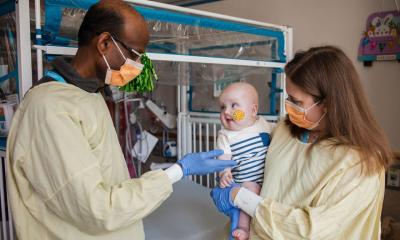
This may make the development of gene editing treatments for smaller disease populations financially feasible and commercially scalable
Trevor Martin
‘There are almost 7,500 known genetic diseases, of which over 4,500 are believed to be caused by a mutation in a single gene,’ commented Trevor Martin, PhD, co-founder and CEO of Mammoth Biosciences of Brisbane, California, a biotech company developing curative therapies based on its ultracompact CRISPR systems. ‘What’s gone largely under the radar is that the FDA has been moving forward with platform designations that have the potential to really accelerate patient access to life-changing medicines.3 There is a lot of promise with gene editing because many of the same building blocks may be used for many of these monogenic mutations. This may make the development of gene editing treatments for smaller disease populations financially feasible and commercially scalable.’
The field of gene editing therapy is moving at a very fast pace, with more than 20 clinical trials currently ongoing. The panellists believe that with a combination of breakthroughs in both research and manufacturing, and the adoption of platformization, the costs will be reduced and the feasibility of delivering gene editing therapy will increase. Gene editing technologies are expected to work for most mutation types.
Dr Liu hopes that this will motivate a change in investment to develop cures for mutational diseases. He pointed out: ‘About 50 million people are living with cancer. The global investment being made to cure cancer is about $10,000 per person per year. It’s about $500 per patient who has HIV/AIDS. Yet only $3 per year is being spent on diseases that affect 400 million people living with rare genetic mutations. We believe that gene editing in the next 5 to 10 years has the potential to be transformational.’
Profiles:
Omar Abudayyeh, PhD, is Director of Gene Editing at the Mass General Brigham Gene and Cell Therapy Institute, an Assistant Professor of Harvard Medical School, and a faculty member of the Department of Stem Cell and Regenerative Biology at Harvard University. He is co-director of the Abudayyeh-Gootenberg Lab, which investigates programmable systems in biology for the development of molecular tools, diagnostics, and therapeutics.
Steve Favaloro is chairman and CEO of Genezen, a gene and cell therapy Contract Development Manufacturing Organization (CDMO) focused on advancing gene and cell therapies through development and manufacturing. The Indianapolis, Indiana-headquartered company partners from concept to commercial availability and scaling to produce life-saving gene and cell therapies.
David R. Liu, PhD, is the Thomas Dudley Cabot Professor of the Natural Sciences at Harvard University, Richard Merkin Professor and director of the Merkin Institute of Transformative Technologies in Healthcare, vice chair of the faculty at the Broad Institute of MIT and Harvard, and a Howard Hughes Medical Institute (HHMI) investigator. His major research interests include the engineering, evolution, and in vivo delivery of genome editing proteins such as base editors and prime editors to study and treat genetic diseases; the evolution of proteins with novel therapeutic potential using phage-assisted continuous evolution (PACE); and the discovery of bioactive synthetic small molecules and synthetic polymers using DNA-templated organic synthesis and DNA-encoded libraries.
Laura Sepp-Lorenzino, PhD, is Scientific Advisor, Executive Vice President and former Chief Scientific Officer at Intellia Therapeutics. She is an At-Large Director of the American Society of Cell + Gene Therapy (ASGCT). A leader in drug discovery and development of small molecule and oligonucleotide therapeutics, Dr Sepp-Lorenzino’s career has spanned over 30 years in academic and industrial settings.
Trevor Martin, PhD, CEO and cofounder of Mammoth Biosciences, started the company with the mission to enable the next generation of ultracompact CRISPR systems to develop potential long-term curative therapies for patients with life-threatening and debilitating diseases. These include a novel class of ultracompact systems designed to be more specific and enable in vivo gene editing in difficult to reach tissues, utilising both nuclease applications and new editing modalities beyond double-stranded breaks.
References:
- ClinGen Clinical Genome Resource. Pediatric Summary Report. https://actionability.clinicalgenome.org/ac/Pediatric/ui/stg2SummaryRpt?doc=AC1046; Accessed October 26, 2025.
- Musunuru K, Granidette SA, Wang X, et al. Patient-Specific In Vivo Gene Editing to Treat a Rare Genetic Disease. N Engl J Med. 2025;392(22):2235-2243. https://doi.org/10.1056/nejmoa2504747
- Brooks PJ, Ottinger EA, Portero D, et al. The Platform Vector Gene Therapies Project: Increasing the Efficiency of Adeno-Associated Virus Gene Therapy Clinical Trial Startup. Hum Gene Ther. 2020;31(19-20):1034–1042. https://doi.org/10.1089/hum.2020.259