
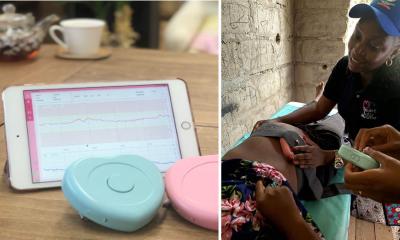
iCTG used on Tanzanian mothers: The team leader in Tanzania, Dr. Beatrice Mwilike, showing how to use the iCTG.
Image source: Hiroshima University; credit: Melody International Ltd.
The main causes of stillbirths and neonatal deaths in Tanzania are prematurity and hypoxia. Current fetal monitoring technology in many LMICs is either immobile and expensive to maintain or limited to basic tools like fetoscopes that rely on intermittent listening and can miss critical signs of fetal distress.
The smart, wireless and user-friendly iCTG notifies healthcare providers of fetal heart rate abnormalities, helping them make timely decisions that improve outcomes. If abnormalities are detected, immediate treatment can be given, such as intrauterine resuscitation, including maternal repositioning, provision of fluids and oxygen administration. In emergencies, women are transferred to the hospital via ambulance while the iCTG continues to monitor their condition.
Between October 2023 and September 2024, the researchers enrolled 763 women at 32 weeks gestation or later across four facilities in the Kisarawe and Bagamoyo districts. While 492 women were monitored using iCTG, the other 271 received standard care.
The iCTG group achieved significantly better outcomes compared to those not using the device: perinatal mortality dropped to 2.6% from 6.6%. The device also proved far more sensitive, with fetal heart rate abnormalities detected 8-10 times more frequently than with standard techniques. The proportion of newborns with low Apgar scores -indicating potential breathing or health problems – also decreased significantly.
Rates of caesarean sections were higher when iCTG was used (27.6% versus 10.3%). While surgical delivery can reduce maternal and infant mortality when medically necessary, the researchers highlight the need for clear clinical guidelines to prevent unnecessary procedures.