
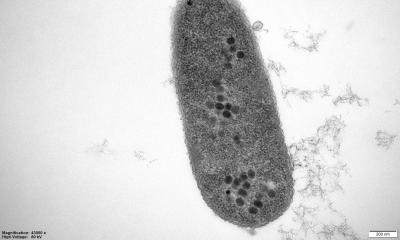

Phages attacking bacteria under the microscope
Image source: University of Southampton
Different phages work a bit like different keys – each one can only “unlock” (infect) certain strains of the bacteria. The Klebsiella Phage Collection fully characterises 52 different phages, alongside 74 strains of Klebsiella. These phages come from five viral families, including a newly discovered group linked to the human gut. Previous studies have suggested that some strains of Klebsiellaare associated with inflammation in the gut, potentially worsening inflammatory bowel disease (IBD).
Dr Nobrega commented: “Some of these newly identified phages can be found in people’s guts across the world, in everyone from pre-term babies to older adults. They were found in healthy guts, so we know they are important for good gut health. The presence or absence of certain phages can predict how severe diseases like bowel cancer and IBD are going to be, so our discovery, along with our new library of phages, paves the way for more research to understanding more about these diseases and ultimately improve treatments.”
Kathryn Pretzel-Shiels, CEO of Bowel Research UK, said: “Research like this is crucial in understanding the best way to harness the power of the microbiome to prevent and treat bowel conditions. We’re enabling more research to help scientists fully understand the role our gut microbiome plays in maintaining a healthy gut and protecting us from bowel disease.”
The hope is that this phage library will not only support new treatments but also improve understanding of how phages and bacteria interact – knowledge that could prove vital in the fight against antibiotic resistance.