
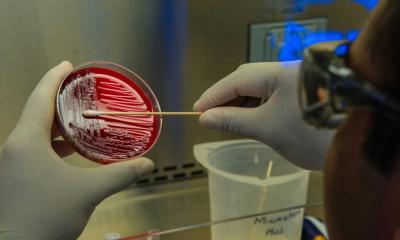
Once this bacterium establishes itself, it tends to persist rather than being replaced by new infections. This persistence helps explain why the bug can be so difficult to eradicate in hospital settings
Lewis Fisher
P. aeruginosa is a common bacterium that can cause disease in humans, plants and animals. It is a major cause of hospital-acquired infections and can result in conditions such as pneumonia, ear infections, urinary tract infections, and wound infections. The bacterium is also known to be one cause of sepsis. Sepsis occurs when the body responds improperly to an infection. The infection-fighting process starts to attack the body, causing some organs to shut down. It is a life threatening condition and in the UK, there are 48,000 sepsis related deaths each year and five related deaths occur every hour.1
In a previous study,2 research has shown that P. aeruginosa has moved from the gut to the lungs in an individual intensive care unit (ICU) patient, bringing to light its ability to move and colonise other body sites. However, how often this happens, and in which direction the bacteria tend to spread, have remained unclear.
In a new study, researchers at the Sanger Institute analysed metagenomic3 sequencing data from 256 hospital patients in Italy.4 They used these data to understand where P. aeruginosa starts to colonise and in what direction the bacterium moves throughout the body.
Of the 84 patients where P. aeruginosa genomes could be recovered, the team found 27 cases where the same bacterial clone (cells that are identical in their DNA) appeared across multiple body sites. This indicates that most of these infections were not acquired repeatedly from the hospital environment, but most were established and colonised by a single clone over time and spread within the patient’s own body. Additionally, P. aeruginosa infection in ICU patients was significantly more common than in patients on other wards.