Category: health
Wellness, fitness, medical news
-
Mobile fetal heart monitoring linked to fewer newborn deaths
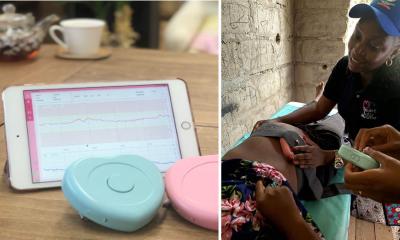
iCTG used on Tanzanian mothers: The team leader in Tanzania, Dr. Beatrice Mwilike, showing how to use the iCTG. Image source: Hiroshima University; credit: Melody International Ltd. The main causes of stillbirths and neonatal deaths in Tanzania are prematurity and hypoxia. Current fetal monitoring technology in many LMICs is either immobile and expensive to maintain read more
Written by
-
When music lights up the brain: insights from fMRI
Music as a mirror of the mind For Anne-Isabelle de Parcevaux, this journey into neuroscience is more than an experiment – it’s a new way of hearing herself. ‘As musicians, we work so hard on technique that we sometimes forget how complex our perception really is. Seeing the brain in action reminds us that music read more
Written by
-
How to reduce the risk of head and neck lymphedema after radiotherapy
Head and neck cancer […] affects a sensitive area with a lot of pain and side effects such as speech impairment and problems associated with eating, which in turn impacts many social situations Agneta Hagren “It was shown that three months after treatment, 80% of the patients had lymphedema and after nine months the figure read more
Written by
-
Klebsiella strain to protect against IBD gut infections
Not only did the bacterium eliminate the infection, but it also helped the microbiota regain balance much faster Karina Xavier The breakthrough began when the team noticed something unusual in their antibiotic-treated mice: animals carrying ARO112 showed remarkable resistance to infection. Initial findings, published in Nature Microbiology in 2020, revealed that this harmless Klebsiella competes read more
Written by
-
Why cardiovascular disease and depression often develop together
By clarifying how these diseases influence each other, we can design interventions that break the cycle of comorbidity rather than simply manage its consequences Evangelos Andreakos CVD is the leading cause of death worldwide, with 10.2 million people falling ill with CVD every year across Europe. CVD has remained the most common cause of death read more
Written by

-
Blood biomarker predicts recovery after cardiac arrest
Niklas Nielsen, professor of anaesthesiology and intensive care at Lund University and consultant in intensive care at Helsingborg Hospital mage source: Lund University; photo: Ingemar Hultquist “All those admitted to intensive care after cardiac arrest are unconscious and there is always uncertainty about how long this care is to continue. If the blood test shows read more
Written by

-
Ultrasound 'softens up' tumors before chemo
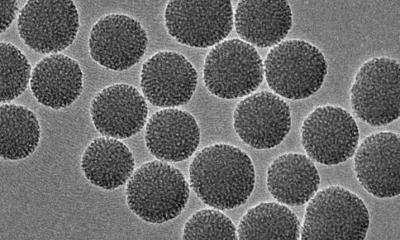
I’m hoping that the particles we build in the lab can start to meld with the acoustic, imaging and therapy technologies that are part of the clinical regimen Andrew Goodwin Sound creates physical waves that move through air, liquid and solid objects. Goodwin said the sounds we hear are essentially small packets of fluctuating pressure read more
Written by
-
AI in breast cancer screening: From mammograms to personalised risk prediction
AI for response prediction remains work in progress Dr Ritse Mann from Radboud University Medical Center in the Netherlands examined the role of AI for response prediction and diagnosis. He said that AI using images may improve pCR (pathologic complete response) prediction over prediction based on clinical features alone – ‘but the effect is modest.’ read more
Written by

-
Repurposed radiotherapy scans to guide prostate cancer treatment
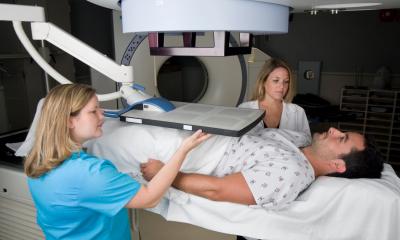
This supports the idea that predictive biomarkers for adaptive radiotherapy may not require new scans or technology, only better use of the data we already collect Zhuolin Yang University of Edinburgh scientists examined daily imaging data from 187 patients treated with prostate radiotherapy, using machine learning tools to identify links between radiomic features and the read more
Written by
-
FFR-CT: AI tool predicts heart attack risk in angina patients
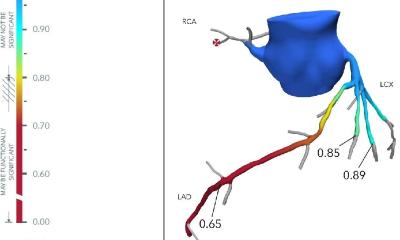
Adding to its diagnostic abilities, this study is the first to provide conclusive evidence of FFR-CT’s prognostic power, independent of other risk factors Timothy Fairbairn An artificial intelligence-based tool has been developed that analyses CCTA images and provides an estimate of blood flow, termed CT-derived fractional flow reserve (FFR-CT). The real-world, retrospective, nationwide FISH&CHIPS study read more
Written by
-
Atrial fibrillation: social inequity persists
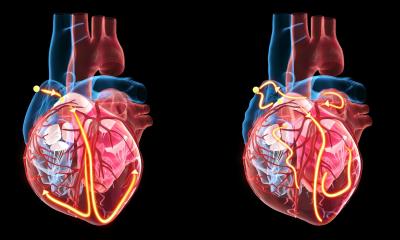
Advances in the management and treatment of atrial fibrillation have improved survival for everyone but have not closed the gap between social groups Nicklas Vinter The study is based on nationwide Danish registry data from more than 380,000 patients diagnosed with atrial fibrillation between 2000 and 2022 and documents inequities in income, education, and social read more
Written by
-
Epidemic spread: individual behaviour matters
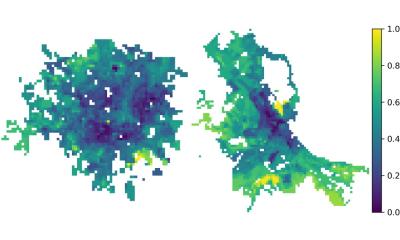
(a–c) Distribution of the population in tiles for the cities under analysis: each tile is coloured according to the number of individuals (see colour bar on the left-hand side). (d) Schematic representation of a tile, with household contacts in blue and social contacts in orange–some of the latter connect to tiles not visible in the read more
Written by
-
Enhancing breast cancer screening to save young women’s lives
Women aged 35–39 were statistically overrepresented compared with other age groups, indicating a strong interest among younger women in personalised screening options Madli Tamm According to Professor of Medical Genetics Neeme Tõnisson, the project has received significant recognition across the medical and scientific community. Recently, the European Institute of Innovation and Technology (EIT) awarded the read more
Written by

-
Preventing kidney damage after surgery with biomarkers
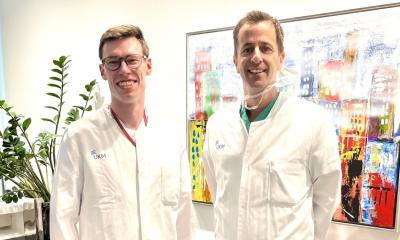
‘Acute kidney injury after surgery is a frequently underestimated problem,’ emphasises Prof Alexander Zarbock, director of the Department of Anaesthesiology, Surgical Intensive Care Medicine and Pain Therapy at the University Hospital Münster (UKM) and lead author of the study. ‘We were able to show that the intervention can be implemented in hospitals across Europe. It read more
Written by
-
Vulvodynia: study paves way for patient-centred treatment
Athina Zoi Lountzi Image source: University of Stirling Athina, of Stirling’s Faculty of Natural Sciences, said: “This is, to our knowledge, the first participatory, consensus-driven prioritisation focused specifically on vulvodynia research. It shows that patients and clinicians agree that better education for healthcare providers, improved care pathways and multidisciplinary support are top priorities for vulvodynia read more
Written by

-
Brain tumour or radiation necrosis? AI can tell them apart
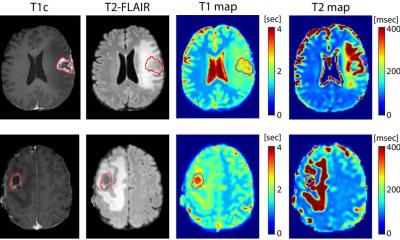
York Research Chair and Professor Ali Sadeghi Naini, lead author on the study. Image source: YorkUniversity “The study shows, for the first time, that novel attention-guided AI methods coupled with advanced MRI can differentiate, with high accuracy, between tumour progression and radiation necrosis in patients with brain metastasis treated with stereotactic radiosurgery,” says York Research read more
Written by
-
Breast imaging for male and transgender patients: bridging the knowledge gap
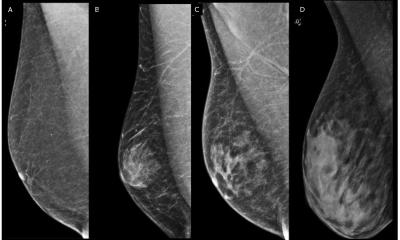
Transgender patients face multiple barriers Mammography in cranio-caudal (A) and medio-lateral oblique (B) views in a 52-year-old transgender woman after 5 years of hormone therapy. Anna D’Angelo from the Catholic University of the Sacred Heart in Rome addressed transgender breast imaging, emphasising the importance of correct terminology. Transgender, she clarified, is an umbrella term for read more
Written by
-
AI chatbots for mental health: experts call for clear regulation
We need to ensure that these technologies are safe and protect users’ mental well-being rather than put it at risk Falk Gerrik Verhees The research team emphasizes that the transparency requirement of the European AI Act – simply informing users that they are interacting with AI – is not enough to protect vulnerable groups. They read more
Written by

-
Two Dutch hospitals implement AI for lung nodule detection on chest X-rays
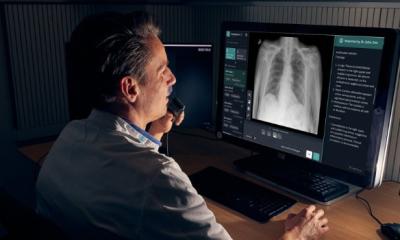
By integrating this AI program into our workflow, we can significantly enhance our ability to detect subtle lung nodules, which is paramount for the early diagnosis of lung cancer Firdaus Mohamed Hoesein UMC Utrecht, one of the Netherlands’ largest university hospitals, combines academic research with clinical practice. The hospital has an established scientific track record read more
Written by
-
At-home monitoring safely cuts hospital time after T-cell redirecting therapy
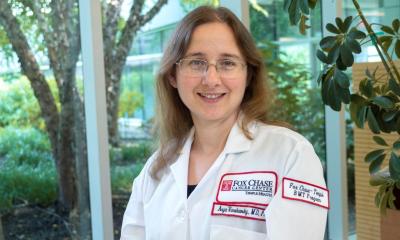
Asya Varshavsky-Yanovsky, MD, PhD, an Associate Professor in the Blood Cancer and Cellular Therapy Institute at Fox Chase Cancer Center Image source: Fox Chase Cancer Center The study, presented at the 67th American Society of Hematology (ASH) Annual Meeting and Exposition, showed that a structured outpatient model significantly reduced the number of days patients spent read more
Written by